






Insurance and Billing · Coding Reference
ICD-10-CM Dry Eye Codes a quick reference for ocular surface visits.
The diagnosis codes most often used in dry eye and lid care, with their laterality patterns, checked against the current ICD-10-CM code set. Use it to find the right family fast, then code to the most specific option your documentation supports.
Quick answer
Code the finding, the eye and, for lids, the lid.
Dry eye syndrome sits under H04.12- with a final digit for right, left or both lacrimal glands. Keratoconjunctivitis sicca not specified as Sjögren's is H16.22-, and Sjögren syndrome with keratoconjunctivitis is M35.01. Meibomian gland dysfunction (H02.88-) and blepharitis (H01.0-) use eyelid characters, including A and B for both lids of one eye. Since October 1, 2025, Demodex infestation has its own code, B88.01.
Key takeaways
- H04.121, H04.122 and H04.123 code dry eye syndrome by right, left or both sides.
- MGD and blepharitis codes end in 1 to 6 by lid, with A and B for both lids of the right or left eye.
- B88.01, Infestation by Demodex mites, took effect October 1, 2025.
- Unspecified-eye codes (ending in 9) usually signal missing documentation.
- Payers' coverage policies list which diagnoses support each test or procedure.
Dry eye and sicca codes.
Laterality is the last character.
| Code | Description |
|---|---|
| H04.121 / H04.122 / H04.123 | Dry eye syndrome of right / left / bilateral lacrimal glands |
| H04.129 | Dry eye syndrome of unspecified lacrimal gland |
| H16.221 / H16.222 / H16.223 | Keratoconjunctivitis sicca, not specified as Sjögren's, right / left / bilateral |
| M35.00 | Sjögren syndrome, unspecified |
| M35.01 | Sjögren syndrome with keratoconjunctivitis |
| H16.141 / H16.142 / H16.143 | Punctate keratitis, right / left / bilateral |
| H16.211 / H16.212 / H16.213 | Exposure keratoconjunctivitis, right / left / bilateral |
Lid margin codes and the eyelid characters.
MGD and the blepharitis families share one pattern for the final character.
| Final character | Meaning |
|---|---|
| 1 | Right upper eyelid |
| 2 | Right lower eyelid |
| 3 | Right eye, unspecified eyelid |
| 4 | Left upper eyelid |
| 5 | Left lower eyelid |
| 6 | Left eye, unspecified eyelid |
| 9 | Unspecified eye, unspecified eyelid |
| A | Right eye, upper and lower eyelids |
| B | Left eye, upper and lower eyelids |
Example: H02.88A is meibomian gland dysfunction of the right eye, upper and lower eyelids.
Lid and ocular surface code families.
Each family takes the eyelid characters above.
| Family | Description | Example |
|---|---|---|
| H02.88- | Meibomian gland dysfunction | H02.88B, left eye, upper and lower eyelids |
| H01.00- | Unspecified blepharitis | H01.00A, right eye, upper and lower eyelids |
| H01.01- | Ulcerative blepharitis | H01.014, left upper eyelid |
| H01.02- | Squamous blepharitis | H01.02B, left eye, upper and lower eyelids |
| B88.01 | Infestation by Demodex mites (effective October 1, 2025) | Pair with the blepharitis code your findings support |
| B88.09 | Other acariasis | Mites other than Demodex |
Exam and screening codes that travel with these visits.
Codes that come up when the visit type is routine or preventive.
| Code | Description | Where it shows up |
|---|---|---|
| Z01.00 | Encounter for examination of eyes and vision without abnormal findings | Routine exams |
| Z01.01 | Encounter for examination of eyes and vision with abnormal findings | Routine exams with a finding |
| Z13.5 | Encounter for screening for eye and ear disorders | Medicare glaucoma screening claims (G0117, G0118) |
Code the lids you examined. With the A and B characters available, a bilateral MGD or blepharitis finding usually takes two codes, one per eye, and an unspecified 9 is the first thing a reviewer questions.
RescueLink
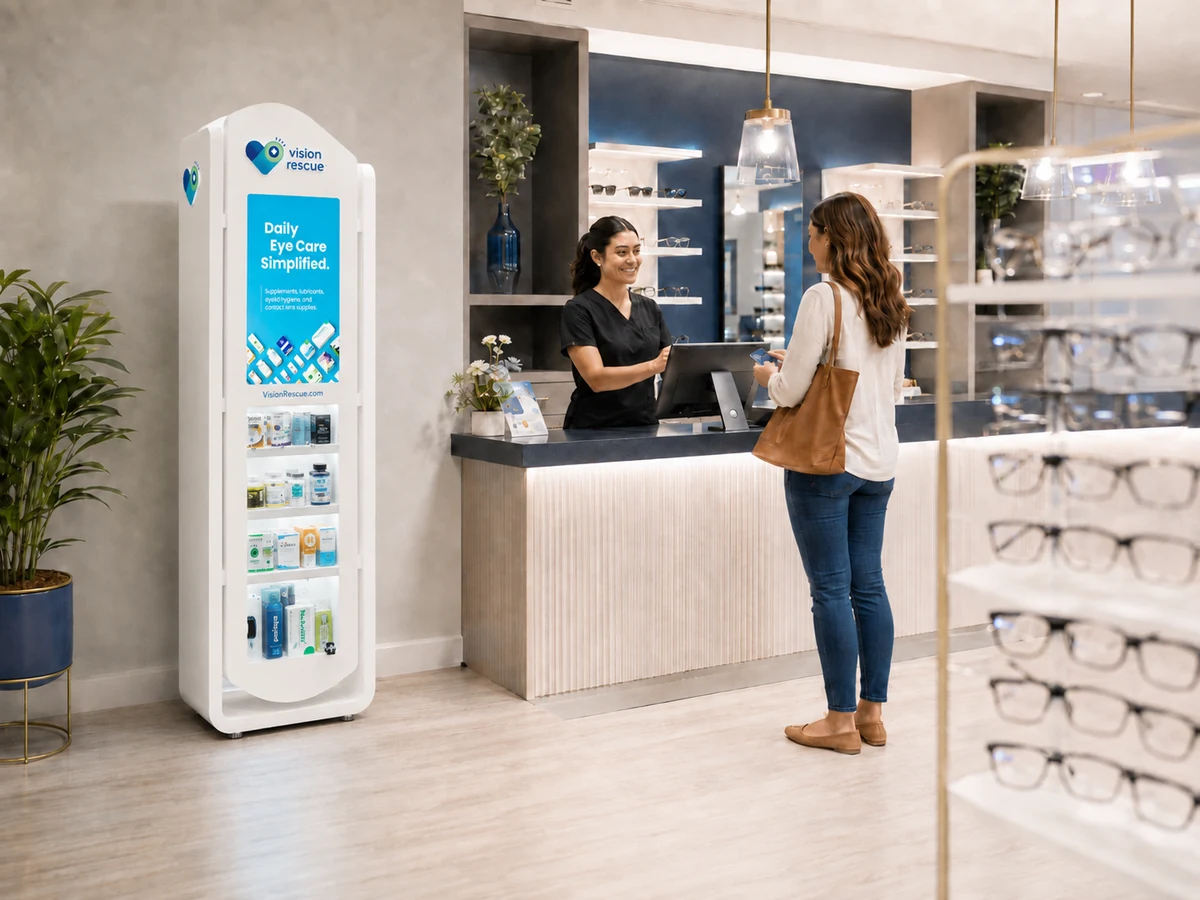
Send the cash-pay products home with the patient.
Vision and medical plans rarely pay for the drops, lid care and supplements a patient uses at home. Send the exact items by text or email; the patient orders in one tap, refills can run on auto-ship, and your practice earns a 15% participation credit on eligible OTC orders on VisionRescue.com. Contact lenses and Rx products are excluded.
- No setup fee, subscription or minimum
- One-tap ordering for the patient
- Optional auto-ship on refills
- Your recommendation stays with your practice
Coding questions
What is the code for bilateral dry eye syndrome?
H04.123, dry eye syndrome of bilateral lacrimal glands.
How do I code MGD in all four lids?
Use H02.88A for the right eye, upper and lower lids, and H02.88B for the left eye, upper and lower lids.
Is there a Demodex code?
Yes. B88.01, Infestation by Demodex mites, took effect October 1, 2025. B88.09 covers other acariasis.
Sicca or Sjögren's?
H16.22- is keratoconjunctivitis sicca not specified as Sjögren's. When Sjögren syndrome with keratoconjunctivitis is documented, M35.01 applies.
Can I use the unspecified-eye codes?
They exist, but most payers expect laterality when the record documents it.
Does this list replace the official code set?
No. Always confirm against the current ICD-10-CM release from CMS and CDC before you bill.
References
- National Library of Medicine. Clinical Table Search Service, ICD-10-CM (current code set lookup). NLM
- Centers for Medicare & Medicaid Services. ICD-10 codes. CMS
- Eyefinity. New ICD-10 codes effective October 1, 2025. Eyefinity
- CMS Medicare Learning Network. Medicare Vision Services, MLN907165, June 2026. CMS (PDF)
About this guide
Written for licensed eye care practices by the Vision Rescue team from plan, CMS and payer sources listed above. Questions: providers@visionrescue.com or 1-855-692-8024.
Important notes and disclosures
Coding reference only, not billing advice. ICD-10-CM is updated every October; confirm each code against the current official release and your payers' policies. Vision Rescue is not affiliated with any payer. Vision Rescue is a distributor of medical supplies and over-the-counter products.
Code it right, then send care home.
Stock the lid care and lubricants your plan calls for, and route the rest through RescueLink.