Wholesale Pricing for Licensed Professionals

Clinical product guide

Prescription dry eye treatments and where each fits.

When OTC care is not enough, here is how prescription and in-office options line up.

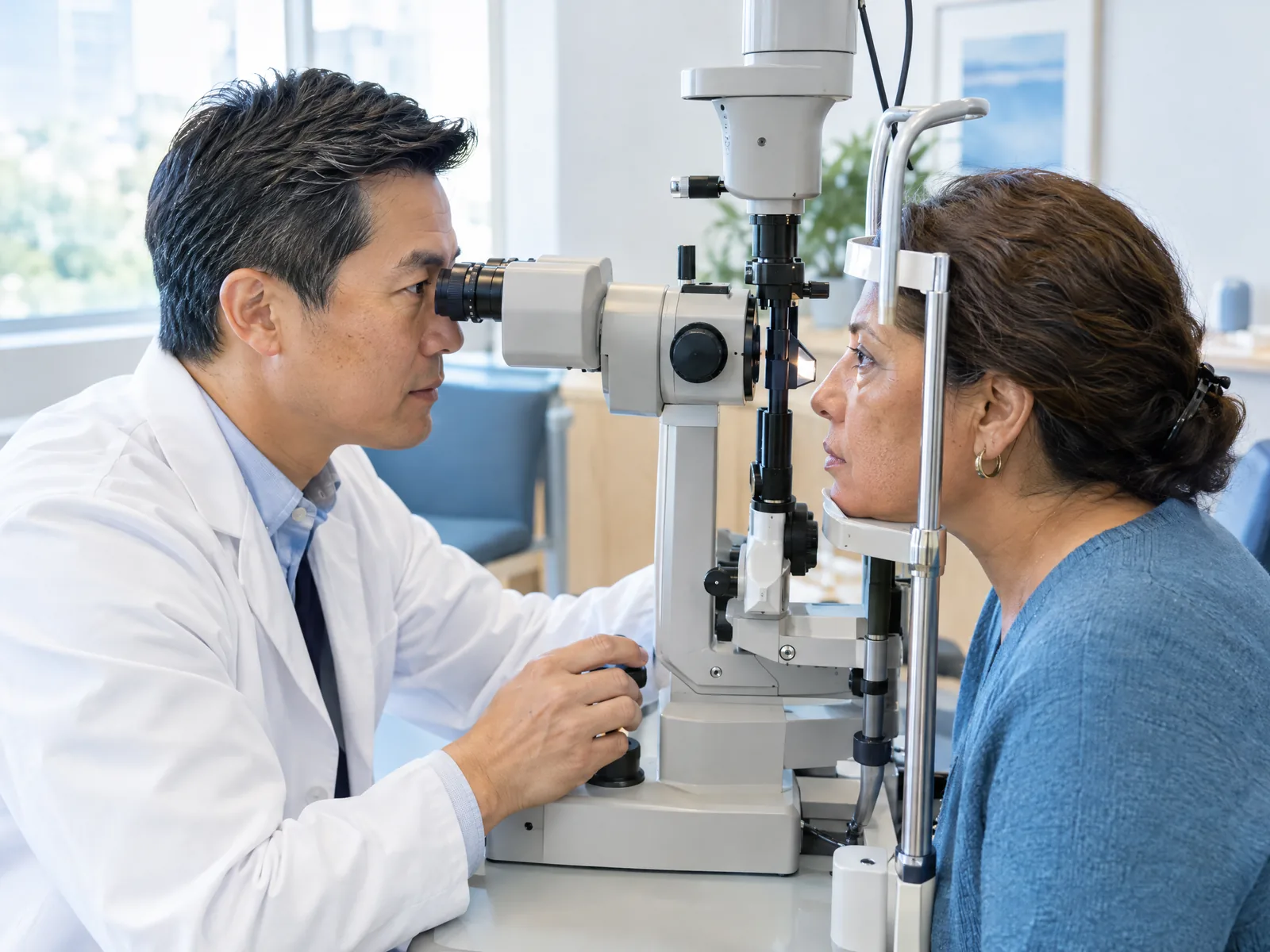
Ophthalmologist examining a patient's tear film at the slit lamp

Quick answer

Match the driver first, then the drug.

Ophthalmologists and optometrists prescribe these within their state's scope.

When inflammation drives the disease, cyclosporine or lifitegrast often works well, with a brief loteprednol course to settle flares. On the evaporative side many doctors turn to Miebo, XDEMVY when collarettes suggest Demodex, and Tyrvaya or Tryptyr when tear production is low. Keeping tears, heat and lid hygiene running underneath tends to help whichever one you choose.

In short

  • Think of the options as jobs: settling inflammation, cutting evaporation, treating Demodex and raising tear production.
  • Lifitegrast and cyclosporine are meant for long-term use, while loteprednol 0.25% carries approval for courses of up to two weeks, which suits flares.
  • Each of the newer agents targets a single driver, so pair the agent with what the slit lamp shows.
  • When drops plateau, procedures take over: IPL, thermal pulsation, amniotic membrane, scleral lenses and plugs.
  • Whichever prescription you write, keeping the OTC basics in place tends to help the plan hold.

Prescription dry eye products

Branded prescriptions, side by side.

Every brand with its labeled indication and dosing and a link to the full PI. Vision Rescue does not sell these brands; they are collected here for reference.

Inflammation, long term

Restasiscyclosporine ophthalmic emulsion 0.05%

AbbVie (Allergan)

Label indication
Indicated to increase tear production in patients whose tear production is presumed to be suppressed due to ocular inflammation associated with keratoconjunctivitis sicca.
Label dosing
One drop twice a day in each eye, about 12 hours apart.
Full prescribing information ›
Inflammation, long term

Cequacyclosporine ophthalmic solution 0.09%

Sun Pharma

Label indication
A calcineurin inhibitor immunosuppressant indicated to increase tear production in patients with keratoconjunctivitis sicca (dry eye).
Label dosing
One drop twice daily in each eye, about 12 hours apart.
Full prescribing information ›
Inflammation, long term

Vevyecyclosporine ophthalmic solution 0.1%

Harrow

Label indication
Indicated for the treatment of the signs and symptoms of dry eye disease.
Label dosing
One drop twice a day in each eye, about 12 hours apart.
Full prescribing information ›
Inflammation, long term

Xiidralifitegrast ophthalmic solution 5%

Bausch + Lomb

Label indication
Indicated for the treatment of the signs and symptoms of dry eye disease (DED).
Label dosing
One drop twice daily in each eye, about 12 hours apart, from a single-use container.
Full prescribing information ›
Flares, short term

Eysuvisloteprednol etabonate ophthalmic suspension 0.25%

Alcon

Label indication
A corticosteroid indicated for the short-term (up to two weeks) treatment of the signs and symptoms of dry eye disease.
Label dosing
One to two drops in each eye four times daily for up to two weeks.
Full prescribing information ›
Evaporation

Mieboperfluorohexyloctane ophthalmic solution

Bausch + Lomb

Label indication
Indicated for the treatment of the signs and symptoms of dry eye disease (DED).
Label dosing
One drop four times daily in the affected eye(s).
Full prescribing information ›
Demodex blepharitis

XDEMVYlotilaner ophthalmic solution 0.25%

Tarsus

Label indication
Indicated for the treatment of Demodex blepharitis.
Label dosing
One drop in each eye twice daily, about 12 hours apart, for 6 weeks.
Full prescribing information ›
Tear production

Tyrvayavarenicline solution nasal spray 0.03 mg

Viatris (Oyster Point)

Label indication
Indicated for the treatment of the signs and symptoms of dry eye disease.
Label dosing
One spray in each nostril twice daily, about 12 hours apart.
Full prescribing information ›
Tear production

Tryptyracoltremon ophthalmic solution 0.003%

Alcon

Label indication
Indicated for the treatment of the signs and symptoms of dry eye disease.
Label dosing
One drop in each eye twice daily, about 12 hours apart.
Full prescribing information ›
In stock at wholesale

Cyclosporine 0.05%generic ophthalmic emulsion, 60 x 0.4 mL

Same active ingredient and strength as Restasis, available to order on your Vision Rescue Pro account.

View product ›

Names and logos are trademarks of their respective owners and appear for identification only. Label text is quoted from DailyMed; check the full PI before use.

The support layer on our shelf.

The basics many doctors keep Rx patients on. Each card opens its guide.

The Rx landscape.

An overview at a glance. Labels are updated, so confirm the current PI before prescribing.

Rx options by job

Based on FDA labeling.

Job Good fit for Agent
Add-ons for MGD and blepharitis At the prescriber's discretion Oral doxycycline or azithromycin, off-label
Raise tear production Reduced tear production Varenicline nasal spray (Tyrvaya); acoltremon (Tryptyr), approved May 2025
Treat Demodex Collarettes and confirmed Demodex blepharitis Lotilaner 0.25% (XDEMVY), approved July 2023
Reduce evaporation Evaporative dry eye. Water-free and preservative-free Perfluorohexyloctane (Miebo), approved May 2023
Short-term flare control Flares, often while a long-term Rx takes effect Loteprednol 0.25% (Eysuvis), up to 2 weeks
Long-term inflammation control Inflammatory dry eye that needs ongoing treatment Cyclosporine (Restasis, Cequa, Vevye); lifitegrast (Xiidra)

Procedures

When drops are not enough.

Procedure Good fit for Action
Punctal plugs Low tear volume once inflammation is under control Help keep the patient's own tears on the eye
Scleral lenses Severe surface disease Vault over the cornea with a fluid reservoir
Amniotic membrane Severe or persistent surface disease Biologic tissue placed on the ocular surface
IPL MGD, including with rosacea A series of light treatments to the skin around the eyes
Thermal pulsation Obstructive MGD that does not clear with home heat Warms the inner lid and expresses blocked glands

Confirm every indication and dose on the current FDA label.

Clinical pearl

Patients on long-term anti-inflammatory therapy may not feel a change for weeks, and that is exactly when they stop. Set the expectation on day one, keep the OTC layer going, and book the recheck before the patient leaves.

Treatment paths

Where prescriptions sit among dry eye treatments

Dry eye care runs from home care to surgery, and many patients use several paths at once. Vision Rescue does not rank these paths; the treating doctor and the patient choose based on severity, the main driver and the patient's circumstances.

Sources: TFOS DEWS III Management and Therapy (2025) · AAO Dry Eye Syndrome PPP (2023)

Manufacturers

Companies named on this page

Logos link to each company's website and appear in alphabetical order, at the same size, for identification only.

Alcon logo Bausch + Lomb logo Tarsus Pharmaceuticals logo Viatris logo

Questions doctors ask

Where do cyclosporine and lifitegrast fit?

They are long-term therapy for dry eye driven by inflammation. Indications differ slightly from product to product, so check each label.

When does a steroid make sense?

For flares. Eysuvis (loteprednol 0.25%) carries approval for use of up to two weeks, a useful bridge while a long-term therapy takes hold.

What does the Miebo label cover?

Treatment of the signs and symptoms of dry eye disease. It was approved in May 2023, contains no water and targets evaporation.

Is there a prescription for Demodex?

Yes. XDEMVY (lotilaner 0.25%) gained approval for Demodex blepharitis in July 2023, and it is worth considering when collarettes show up.

What raises tear production?

Two options: Tyrvaya, a nasal spray, and Tryptyr, an eye drop approved in May 2025. Each carries approval for treating the signs and symptoms of dry eye disease.

Does Vision Rescue carry these?

We carry generic cyclosporine 0.05%, plus the support products and in-office supplies covered here. The branded drugs listed on this page are for reference only.

Can optometrists prescribe these drugs?

Ophthalmologists and optometrists both prescribe dry eye drugs, but optometric prescribing authority is set state by state, especially for oral drugs and steroids. Check your state's rules.

References (13)
  • Wolffsohn JS, Benitez-del-Castillo JM, Loya-Garcia D, et al. TFOS DEWS III: Diagnostic Methodology. Am J Ophthalmol. 2025;279:387-450. PubMed
  • Sall K, Stevenson OD, Mundorf TK, Reis BL. Two multicenter, randomized studies of the efficacy and safety of cyclosporine ophthalmic emulsion in moderate to severe dry eye disease. Ophthalmology. 2000;107(4):631-639. PubMed
  • Goldberg DF, Malhotra RP, Schechter BA, et al. A Phase 3, Randomized, Double-Masked Study of OTX-101 Ophthalmic Solution 0.09% in the Treatment of Dry Eye Disease. Ophthalmology. 2019;126(9):1230-1237. PubMed
  • Akpek EK, Wirta DL, Downing JE, et al. Efficacy and Safety of a Water-Free Topical Cyclosporine, 0.1%, Solution for the Treatment of Moderate to Severe Dry Eye Disease: The ESSENCE-2 Randomized Clinical Trial. JAMA Ophthalmol. 2023;141(5):459-466. PubMed
  • Holland EJ, Luchs J, Karpecki PM, et al. Lifitegrast for the Treatment of Dry Eye Disease: Results of a Phase III, Randomized, Double-Masked, Placebo-Controlled Trial (OPUS-3). Ophthalmology. 2017;124(1):53-60. PubMed
  • Korenfeld M, Nichols KK, Goldberg D, et al. Safety of KPI-121 Ophthalmic Suspension 0.25% in Patients With Dry Eye Disease: A Pooled Analysis of 4 Multicenter, Randomized, Vehicle-Controlled Studies. Cornea. 2021;40(5):564-570. PubMed
  • Tauber J, Berdy GJ, Wirta DL, et al. NOV03 for Dry Eye Disease Associated with Meibomian Gland Dysfunction: Results of the Randomized Phase 3 GOBI Study. Ophthalmology. 2023;130(5):516-524. PubMed
  • Yeu E, Wirta DL, Karpecki P, et al. Lotilaner Ophthalmic Solution, 0.25%, for the Treatment of Demodex Blepharitis: Results of a Prospective, Randomized, Vehicle-Controlled, Double-Masked, Pivotal Trial (Saturn-1). Cornea. 2023;42(4):435-443. PubMed
  • Gaddie IB, Donnenfeld ED, Karpecki P, et al. Lotilaner Ophthalmic Solution 0.25% for Demodex Blepharitis: Randomized, Vehicle-Controlled, Multicenter, Phase 3 Trial (Saturn-2). Ophthalmology. 2023;130(10):1015-1023. PubMed
  • Wirta D, Vollmer P, Paauw J, et al. Efficacy and Safety of OC-01 (Varenicline Solution) Nasal Spray on Signs and Symptoms of Dry Eye Disease: The ONSET-2 Phase 3 Randomized Trial. Ophthalmology. 2022;129(4):379-387. PubMed
  • Pattar GR, Wirta D, Jerkins G, et al. Acoltremon Ophthalmic Solution 0.003% for Signs and Symptoms of Dry Eye Disease: Results of Phase 3 Pivotal COMET-2 and COMET-3 Studies. Ophthalmology. 2026;133(5):563-574. PubMed
  • Jones L, Craig JP, Markoulli M, et al. TFOS DEWS III: Management and Therapy. Am J Ophthalmol. 2025;279:289-386. PubMed
  • American Academy of Ophthalmology. Dry Eye Syndrome Preferred Practice Pattern, 2023. AAO

Clinical review

Reviewed by the Medical Advisory Panel, a group of eye care professionals who focus on dry eye and ocular surface disease. Vision Rescue is a licensed pharmaceutical wholesale distributor.

Notes and disclosures

Written for licensed eye care professionals. This guide does not replace clinical diagnosis or treatment, and every decision stays with the treating provider. The groupings and patient-fit notes are a framework only. Use each product according to its current label.

Every prescription goes home with the basics.

Order at wholesale, and use RescueLink to send patients the exact product between visits.

Stay current: Latest eye care industry news