An objective number
Brings a measured tear osmolarity value into the dry eye evaluation.
Black Friday: 15% off at 50 units · 20% off at 100 · 25% off at 200
In-office procedures · Diagnostic test
Bausch + Lomb's handheld ScoutPro gives a quantitative tear osmolarity reading from just 50 nanoliters of tears.
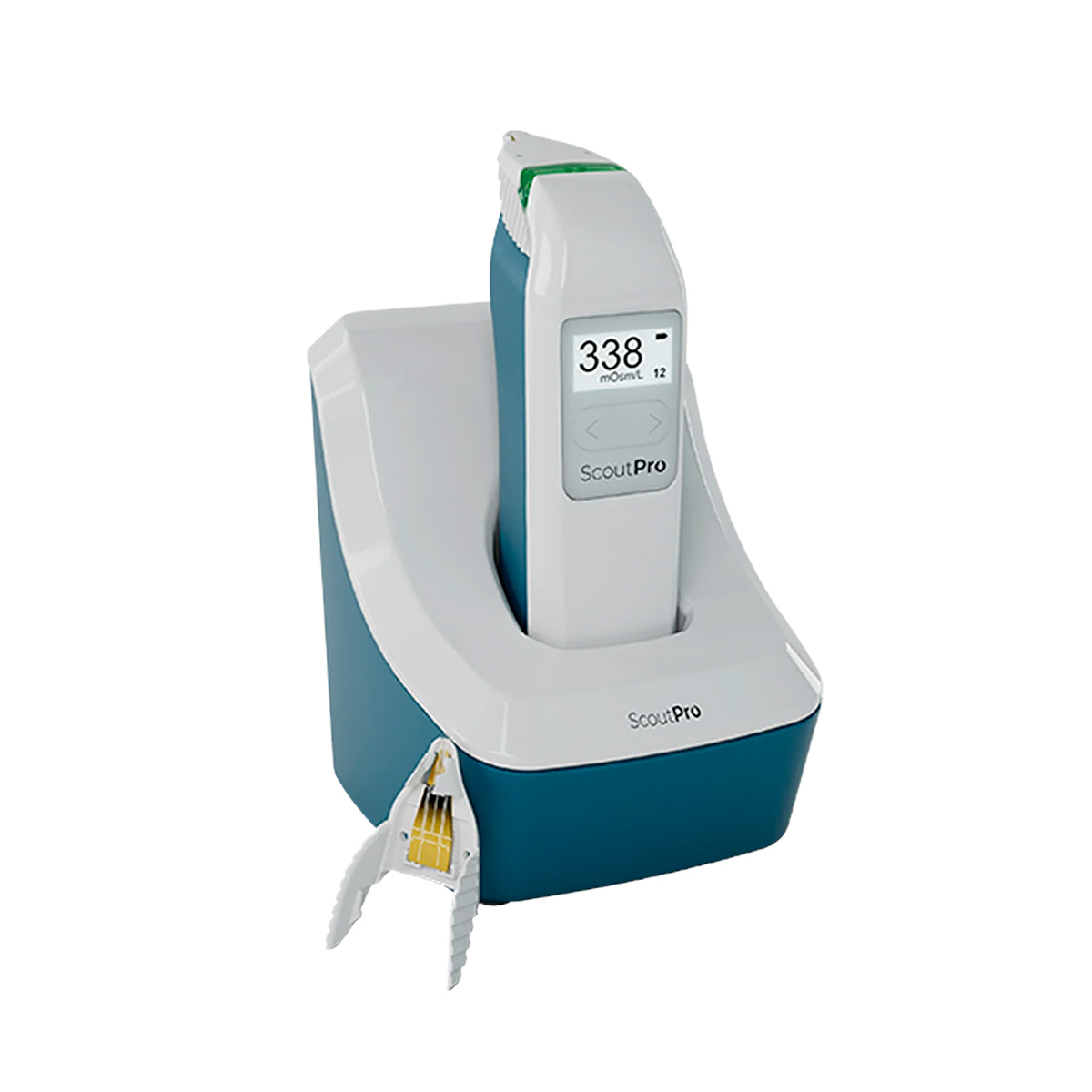
The CLIA-waived test aids in diagnosing dry eye disease and supports ocular surface assessment before surgery, in optometry and ophthalmology practices alike. A single-use test card on the handheld pen draws a nanoliter sample from the tear meniscus and analyzes it right away. The reading shows on the pen within seconds, and the pen never has to be docked.
Brings a measured tear osmolarity value into the dry eye evaluation.
Collection and analysis happen in one portable pen, with a result in seconds at the point of care.
Helps evaluate the ocular surface ahead of cataract surgery. Patients with hyperosmolar tears had more refractive misses above 1.0 D (9.8% compared with 0%) and more dissatisfaction (17.1% compared with 2.5%).
Epitropoulos et al. 2015; Starr et al. 2019A coefficient of variation of 1.5% and 95% analytical accuracy against a standard laboratory osmometer.
Billed under CPT 83861 as a CLIA-waived test.
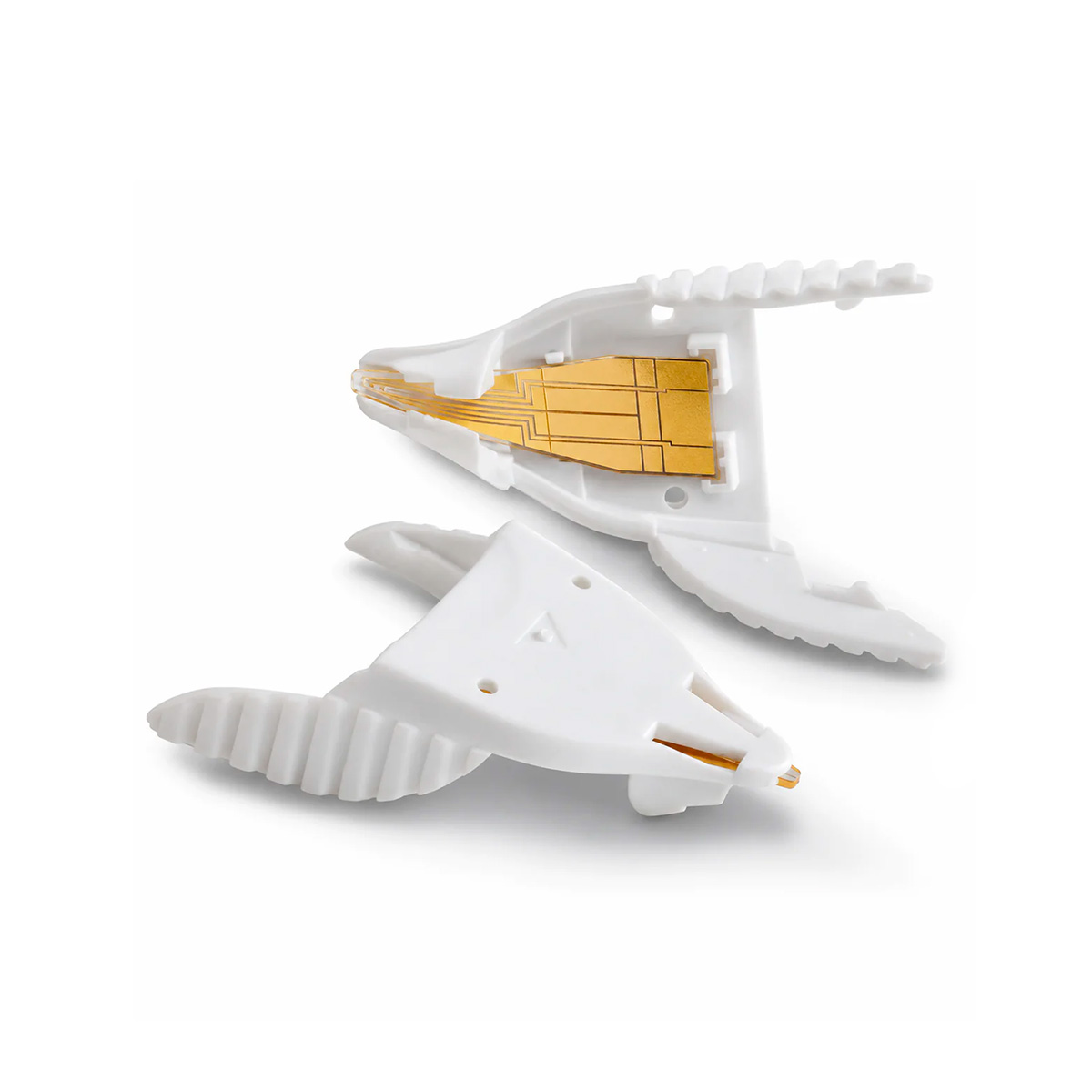
A handheld pen, a small charging base and single-use test cards.
A handheld reader that collects and analyzes the sample itself, with an LCD readout and recall of the last 2 results.
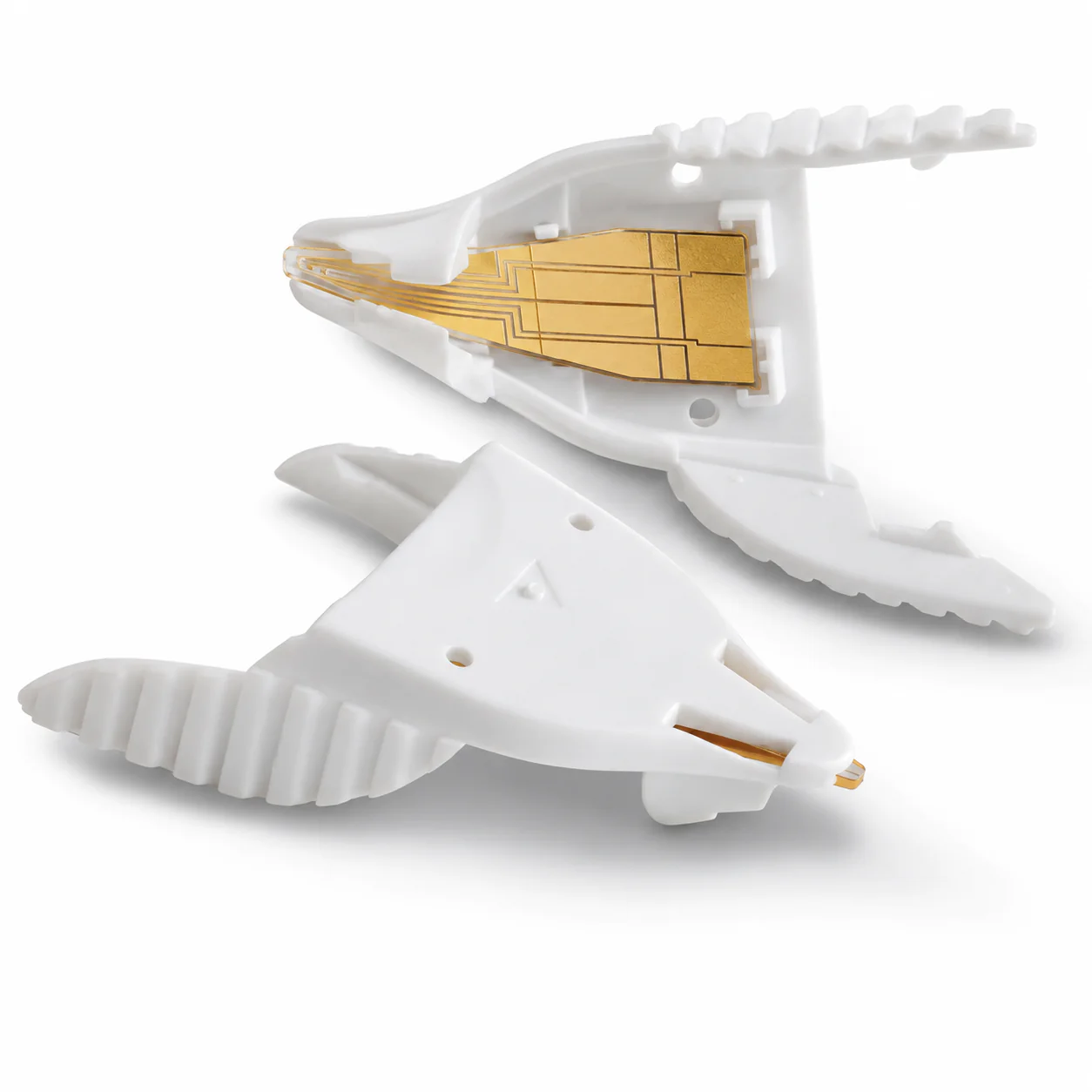
Interchangeable single-use cards that also work with first-generation TearLab test cards.
A small base, wall-mountable, that charges the rechargeable AAA batteries. A charge lasts 8 hours.
Daily electronic check cards, plus normal and high osmolarity control solutions.
Identify patients who would benefit from ocular surface insight, measure osmolarity at the point of care, then use the number in planning and in the conversation with the patient.
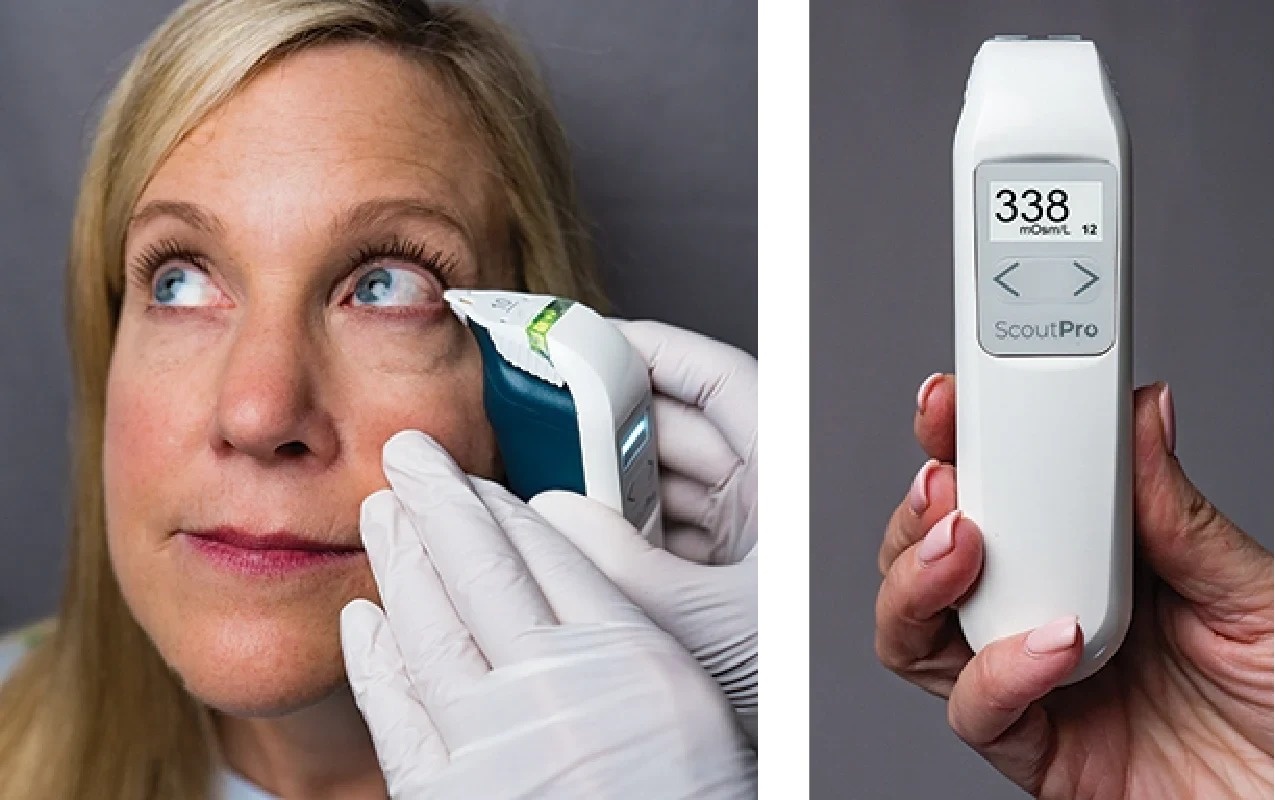
With the patient looking up and away, lower the card tip until it meets the tear line at the lid margin to collect 50 nL. Test before drops, staining or the slit lamp exam.
The pen shows the reading within seconds. Normal is under 308 mOsm/L, with less than 8 between the two eyes.
Every testing site needs a CLIA Certificate of Waiver. Use the electronic check card daily, and run both control solutions every month and whenever a new card lot or shipment comes in.
| Sample volume | 50 nL |
|---|---|
| Time to result | Seconds |
| Result memory | Up to 2 prior results |
| Coefficient of variation | 1.5% |
| Pen power | AAA rechargeable batteries, 4.5 to 5.5 VDC, 0.6 A |
| Battery life | 8 hours per charge |
| Power input | 100 to 240 VAC, 0.6 A max, 47 to 63 Hz |
| Power output | 12 VDC, 1.5 A |
| Operating temperature | 15°C to 30°C (59°F to 86°F) |
| Operating humidity | 10% to 85% noncondensing |
| Operating altitude | 0 to 2,000 meters |
| Storage temperature | 2°C to 35°C (36°F to 95°F) |
| Equipment classification | Class III; powered by Class II power supply; Type 2 applied part; continuous service |
| In the box | Pen, charging base, AAA rechargeable batteries, power supply and cords, 2 electronic check cards, technician guide with CLIA logs |
| Sold separately | Osmolarity test cards, osmolarity control solutions, ScoutCase |
| CLIA status | Waived (CPT 83861) |
The ScoutPro Osmolarity System is an automated device intended to quantitatively measure the osmolarity of human tears to aid in the diagnosis of dry eye disease.
Treatment paths
Dry eye care runs from home care to surgery, and many patients use several paths at once. Vision Rescue does not rank these paths; the treating doctor and the patient choose based on severity, the main driver and the patient's circumstances.
Lubricant drops, gels and ointments, lid hygiene, warm compresses and nutrition. Usually the base layer at every severity.
Recommended by optometrists and ophthalmologists; done by the patient at home. Product guides ›Anti-inflammatory and tear-film drugs such as cyclosporine, lifitegrast and perfluorohexyloctane, varenicline nasal spray, lotilaner for Demodex and short steroid courses.
Prescribed by ophthalmologists and optometrists within state scope. Prescription options ›Gland expression, thermal pulsation and lid-heating devices, intense pulsed light, light therapy and lid-margin cleaning.
Offered in optometry and ophthalmology practices, often run by trained staff. In-office procedures ›Temporary or long-lasting plugs that keep the patient's own tears on the eye, and permanent closure by thermal cautery when plugs are not enough.
Plugs placed by ODs and MDs where state scope allows; cautery closure is a surgical step, usually by an ophthalmologist. Punctal plugs ›For severe disease: autologous serum drops, amniotic membrane, scleral lenses and eyelid surgery such as tarsorrhaphy.
Often cornea and oculoplastic specialists, with the co-managing OD or MD. Scleral lenses ›Sources: TFOS DEWS III Management and Therapy (2025) · AAO Dry Eye Syndrome PPP (2023)
Manufacturers
Logos link to each company's website and appear in alphabetical order, at the same size, for identification only.

The salt concentration of the tears. When it runs high, a state called hyperosmolarity, it can damage the cells of the ocular surface.
Under 308 mOsm/L, with less than 8 between the eyes. A reading over 308 mOsm/L or a difference between eyes greater than 8 is abnormal.
Just 50 nanoliters, which the pen's test card draws up directly.
Within seconds, on the pen display, without docking.
Yes. It is CLIA-waived and reimbursable under CPT 83861. Every testing site needs its own CLIA Certificate of Waiver.
Run the blue electronic check card once daily before testing patients, and any time the pen is dropped. Run both control solution levels every month, and whenever a new lot or shipment of cards arrives.
Yes. First-generation TearLab cards and ScoutPro cards can be used interchangeably.
No. ScoutPro systems and test cards are sold and shipped to practices in the USA only.
Yes. ScoutPro is used in optometry and ophthalmology practices, from primary eye care to cornea and surgical practices that check the ocular surface before surgery. Who may run and bill the test follows state scope of practice and the manufacturer's instructions.
A handheld CLIA-waived system: 50 nL of tears, a reading in seconds. Sold to practices in the USA only.
Stay current: Latest eye care industry news
ScoutPro is a trademark of Trukera Medical, part of Bausch + Lomb. Read the complete manufacturer instructions for use, including every warning, precaution and contraindication, before use. Individual results vary. Photo: Trukera Medical, part of Bausch + Lomb.