







Clinical product guide
Omega-3 and eye nutrition products compared by dose and oil form.
Omegas are a slow layer that builds over weeks, underneath drops, heat and lid hygiene. Judge them on EPA and DHA per daily serving and on the oil form, rather than the headline number on the label.
Quick answer
Add up EPA and DHA, then check the form.
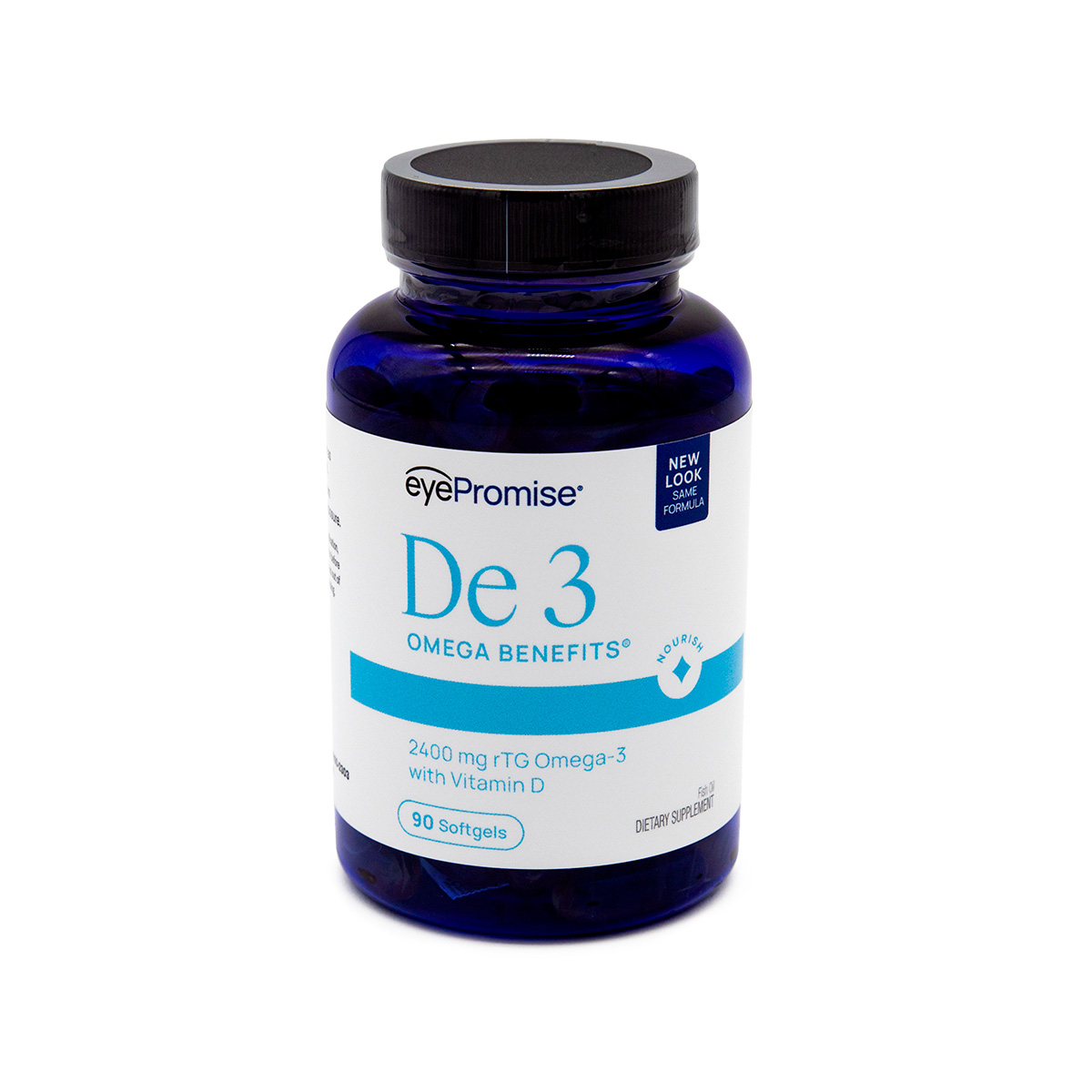
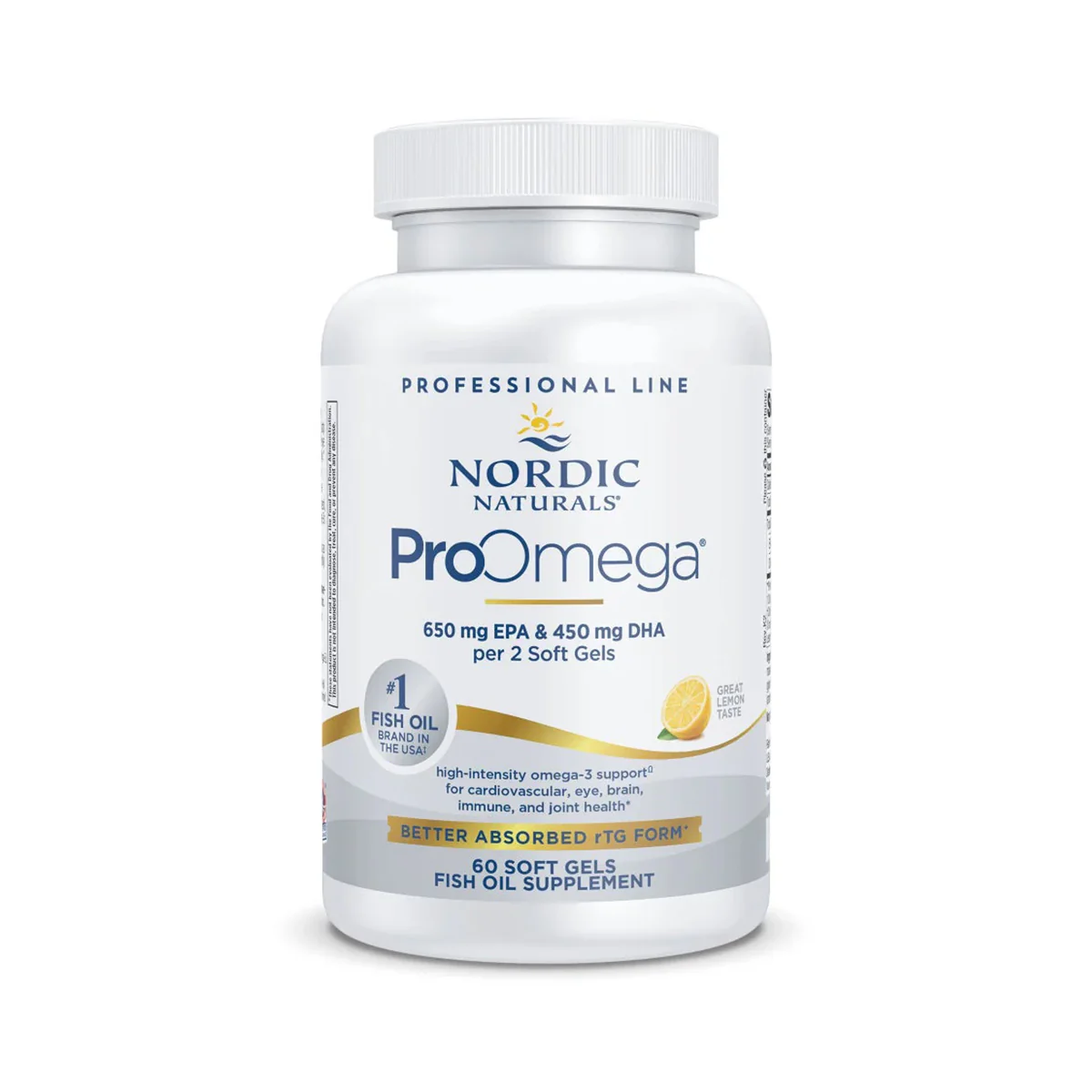
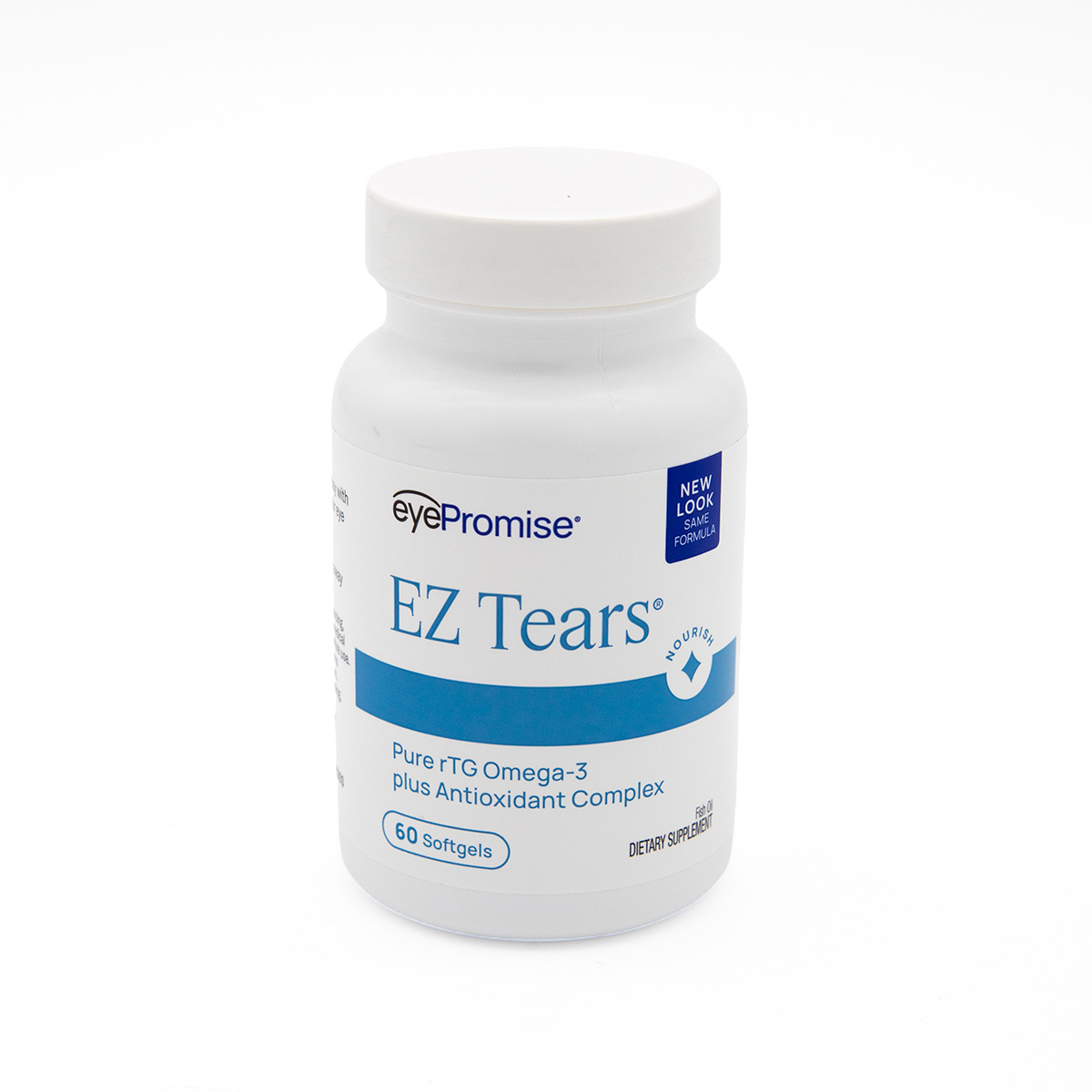
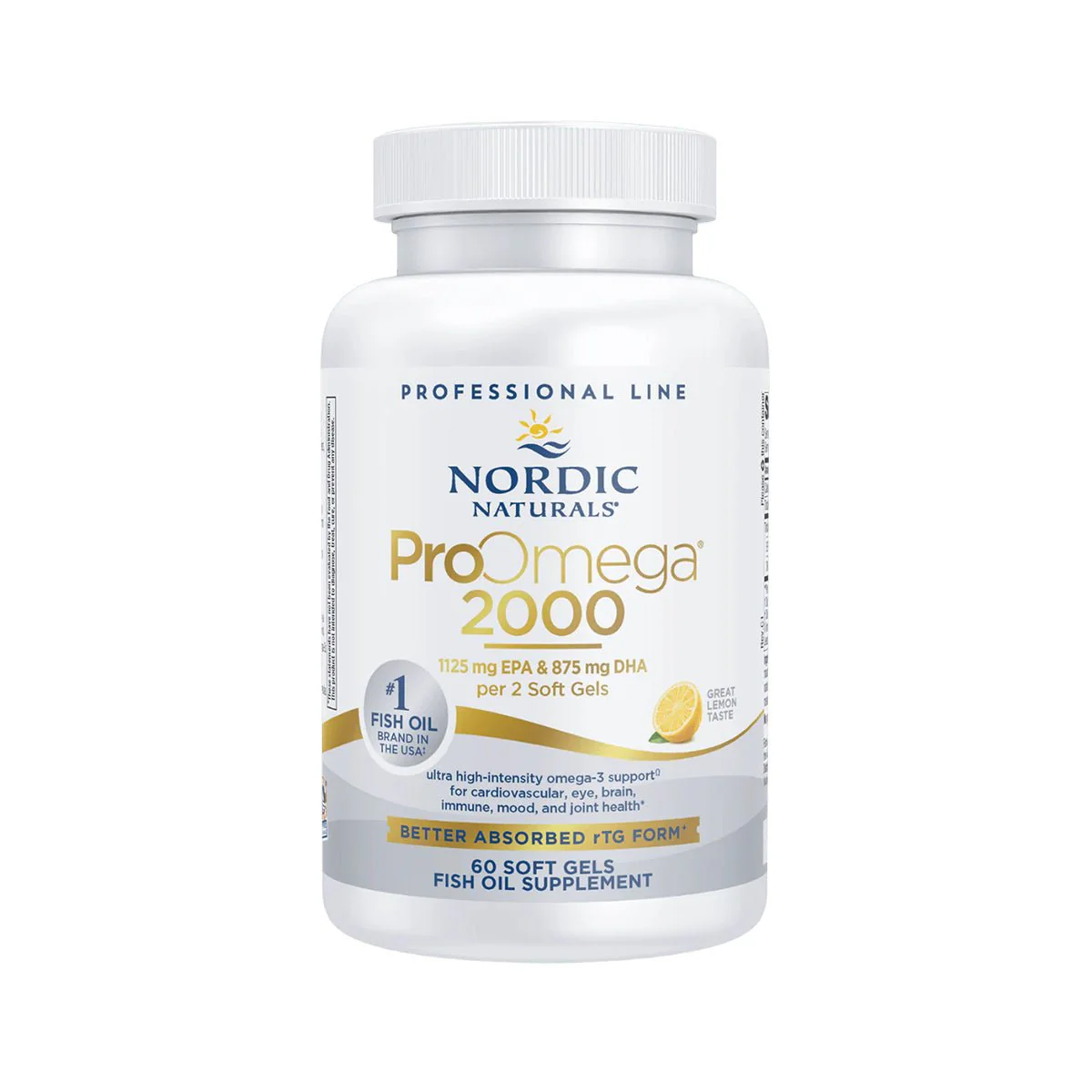
A common starting point is a triglyceride fish oil at a real dose, for example Nordic ProOmega 2000 or PRN De3, which delivers 2,240 mg EPA and DHA across three softgels. When a patient would rather take one product that covers more ground, a blend like EyePromise EZ Tears can fit well.
In short
- The evidence is mixed. In a large 2018 trial, twelve months of 3,000 mg daily did not beat an olive oil placebo on symptoms.
- Form makes a difference. Re-esterified triglyceride omega showed better absorption than the ethyl ester form when the two were compared head to head.
- Compare the total EPA and DHA in a full daily serving, which ranges from two to four softgels.
- Blends layer in carotenoids, botanicals or vitamin D, and a few tear-support blends leave out fish oil entirely.
- A supplement only helps a patient who keeps taking it, so it pairs naturally with auto-ship.
Six groups on the nutrition shelf.
Each group opens its category or a leading product, so formulas and wholesale pricing are easy to compare.
Re-esterified triglyceride fish oil
EPA and DHA at high doses in rTG form, led by PRN De3 and MacuHealth TG Omega-3.
Triglyceride fish oil
Concentrated natural triglyceride fish oils in standard and high-potency strengths.
Omega-plus blends
Fish oil paired in one softgel with carotenoids, evening primrose oil, turmeric or vitamin D.
Tear-support blends without fish oil
Blink NutriTears and similar carotenoid and curcuminoid formulas, for patients who pass on fish oil.
GLA and ALA blends
Plant-derived fatty acids, used with fish oil or instead of it.
Every vitamin we carry
All of our omegas, blends and eye vitamins in one place, for comparing doses and supply sizes.
Top sellers at wholesale.
Ordered by units sold, so the first cards are the supplements practices come back for most.
PRN De3 Dry Eye Omega SoftgelsView product
Nordic Naturals ProOmega (lemon)View product
EyePromise EZ Tears (60)View product
Nordic Naturals ProOmega 2000 (lemon)View product
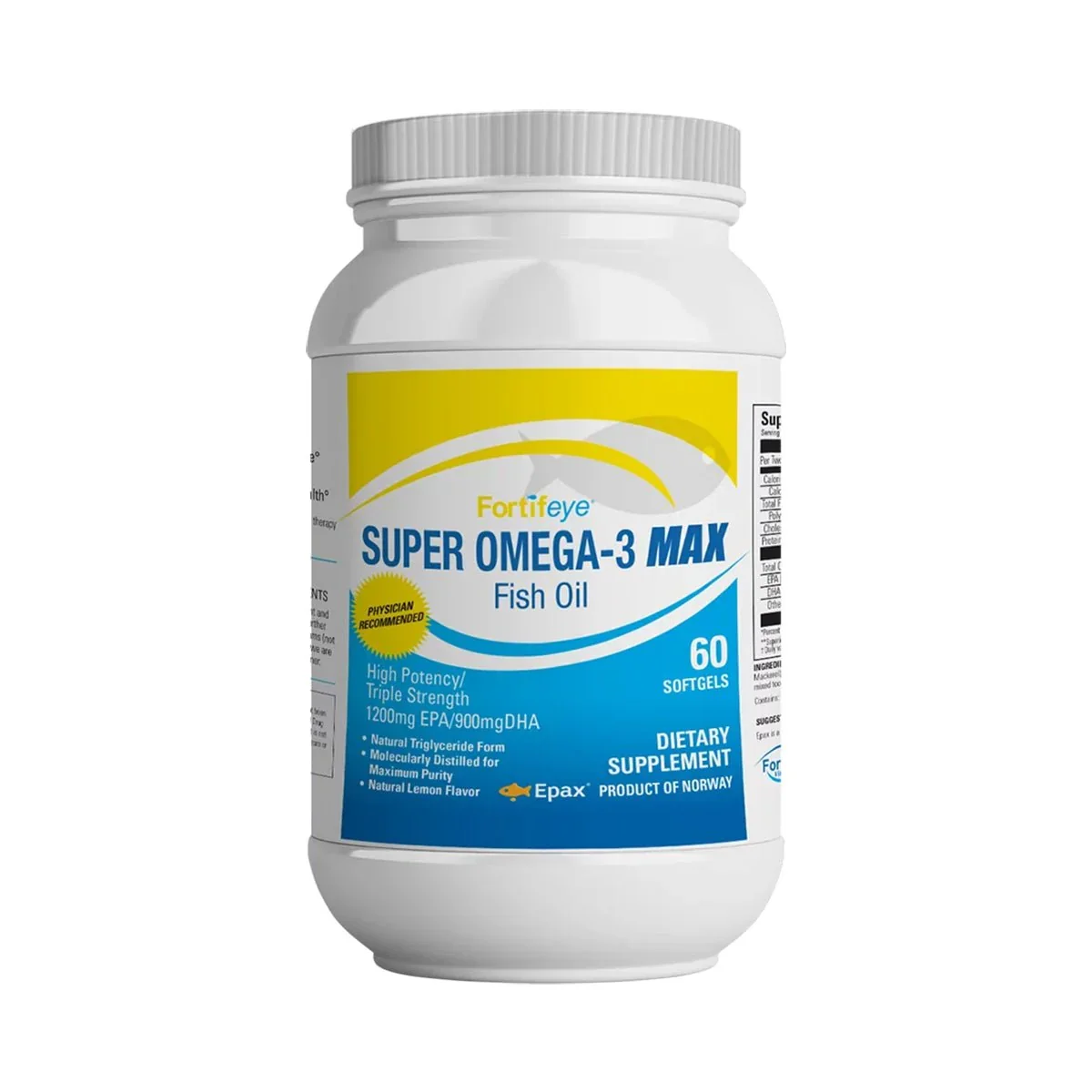 Fortifeye Super Omega-3 Max (60)View product
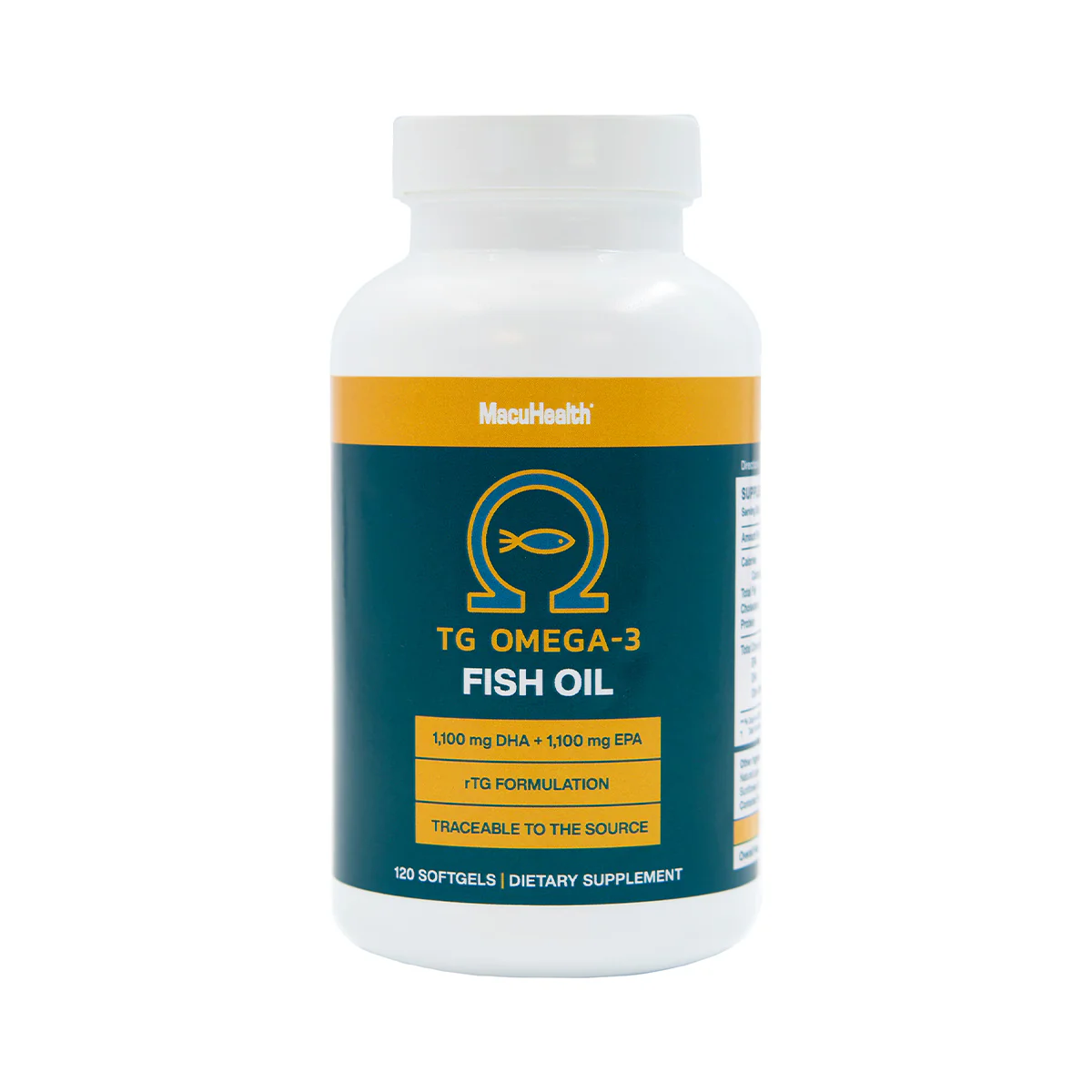 MacuHealth TG Omega-3 (120)View product
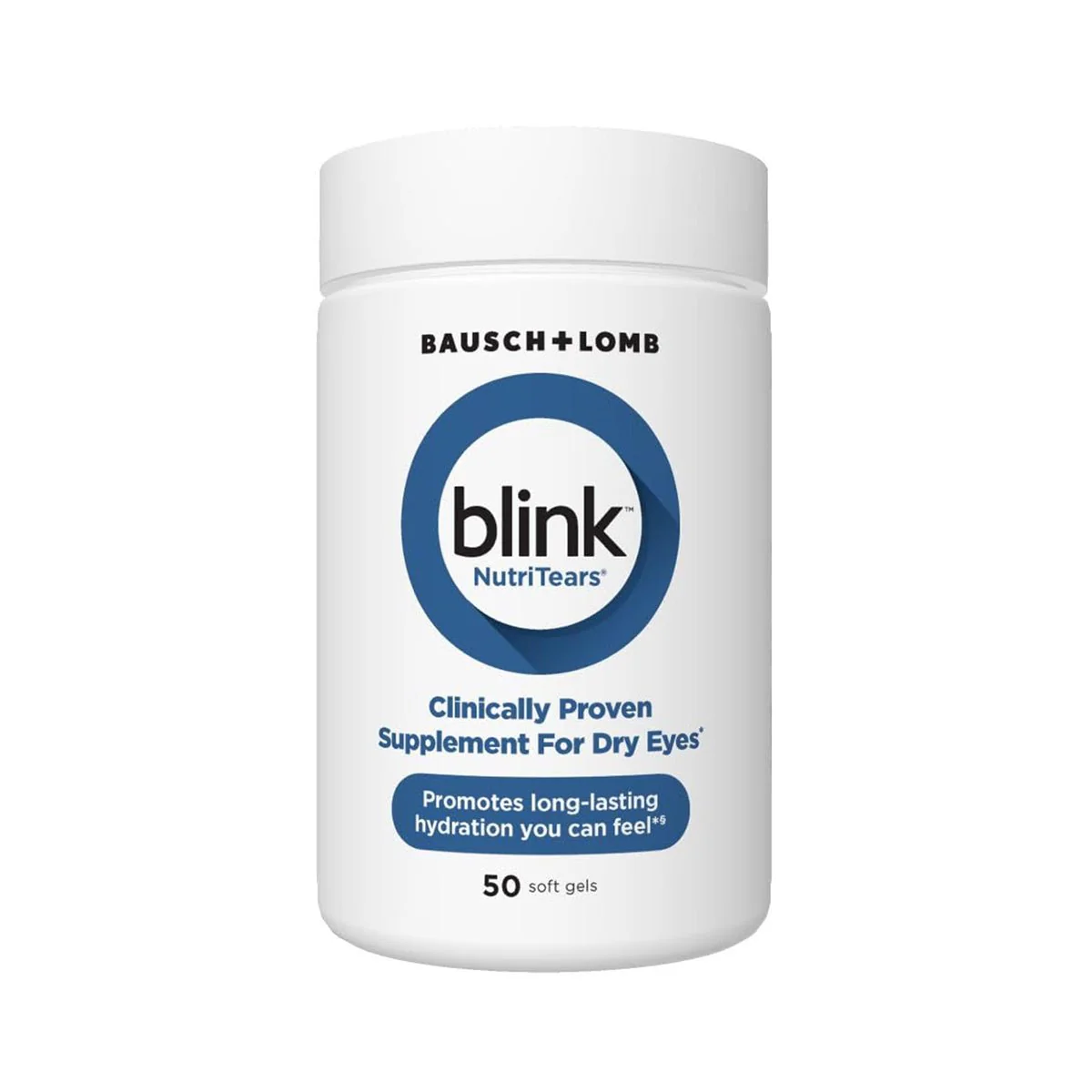 Blink NutriTears Softgels (50)View product
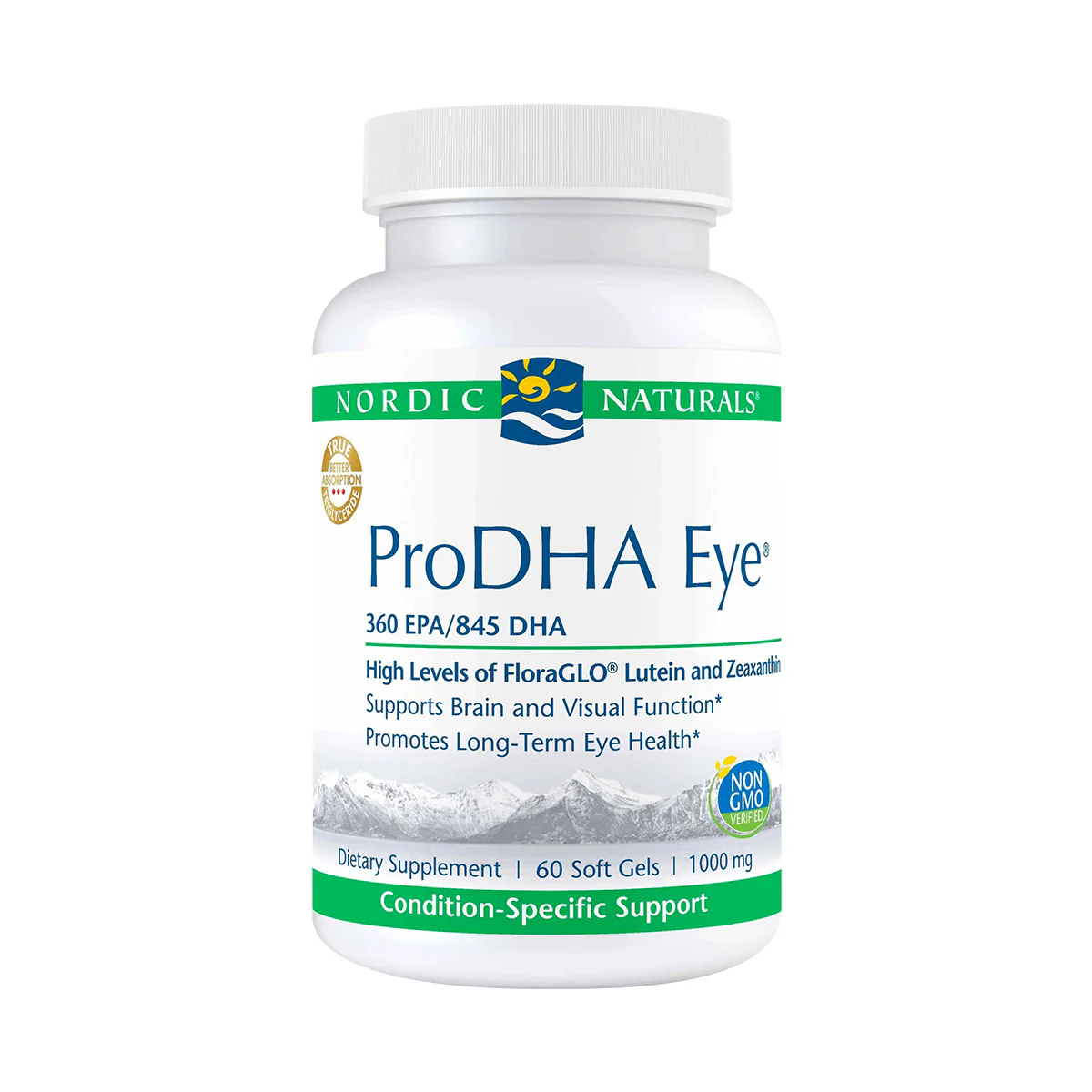 Nordic Naturals ProDHA EyeView product
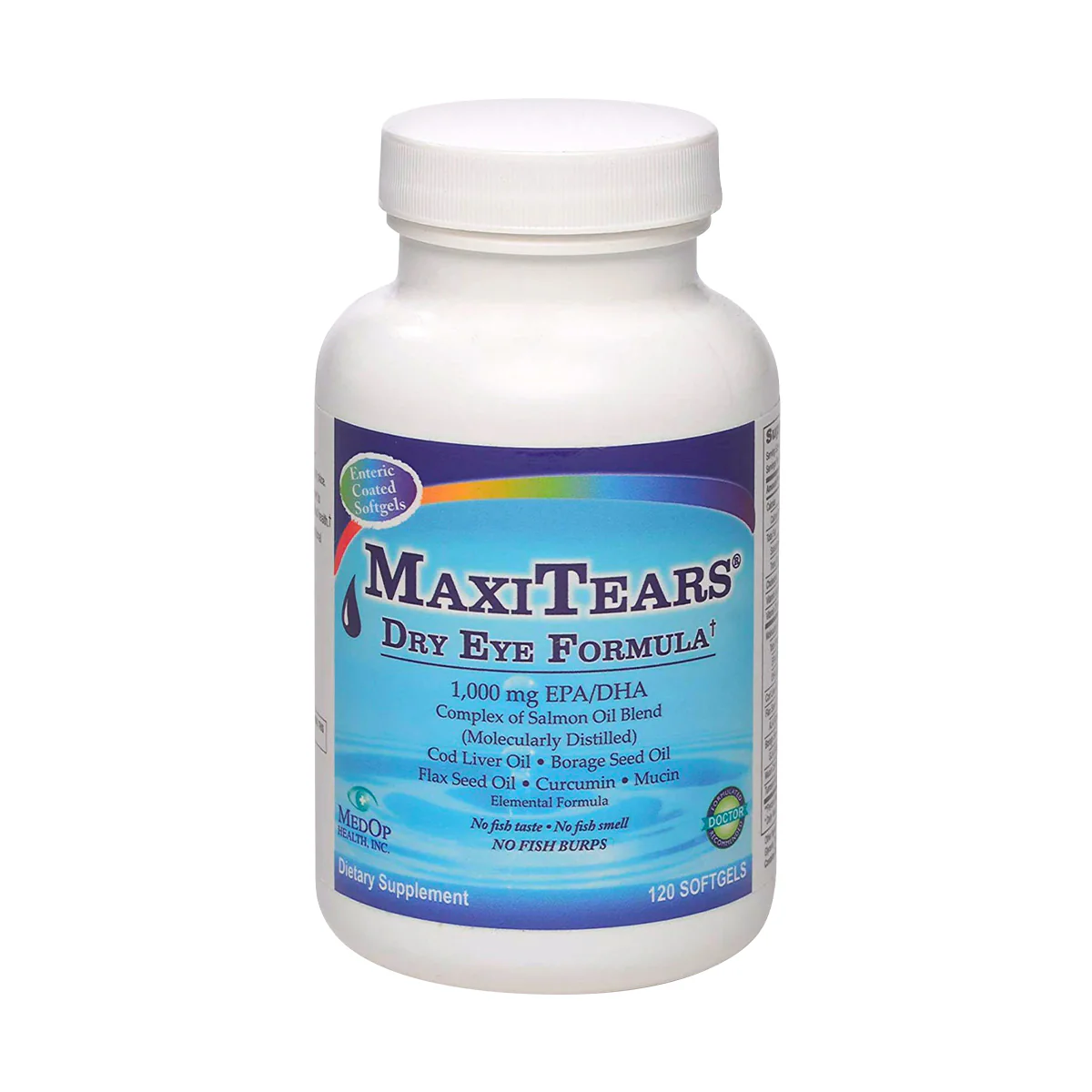 MedOp MaxiTears Eye Formula (120)View product
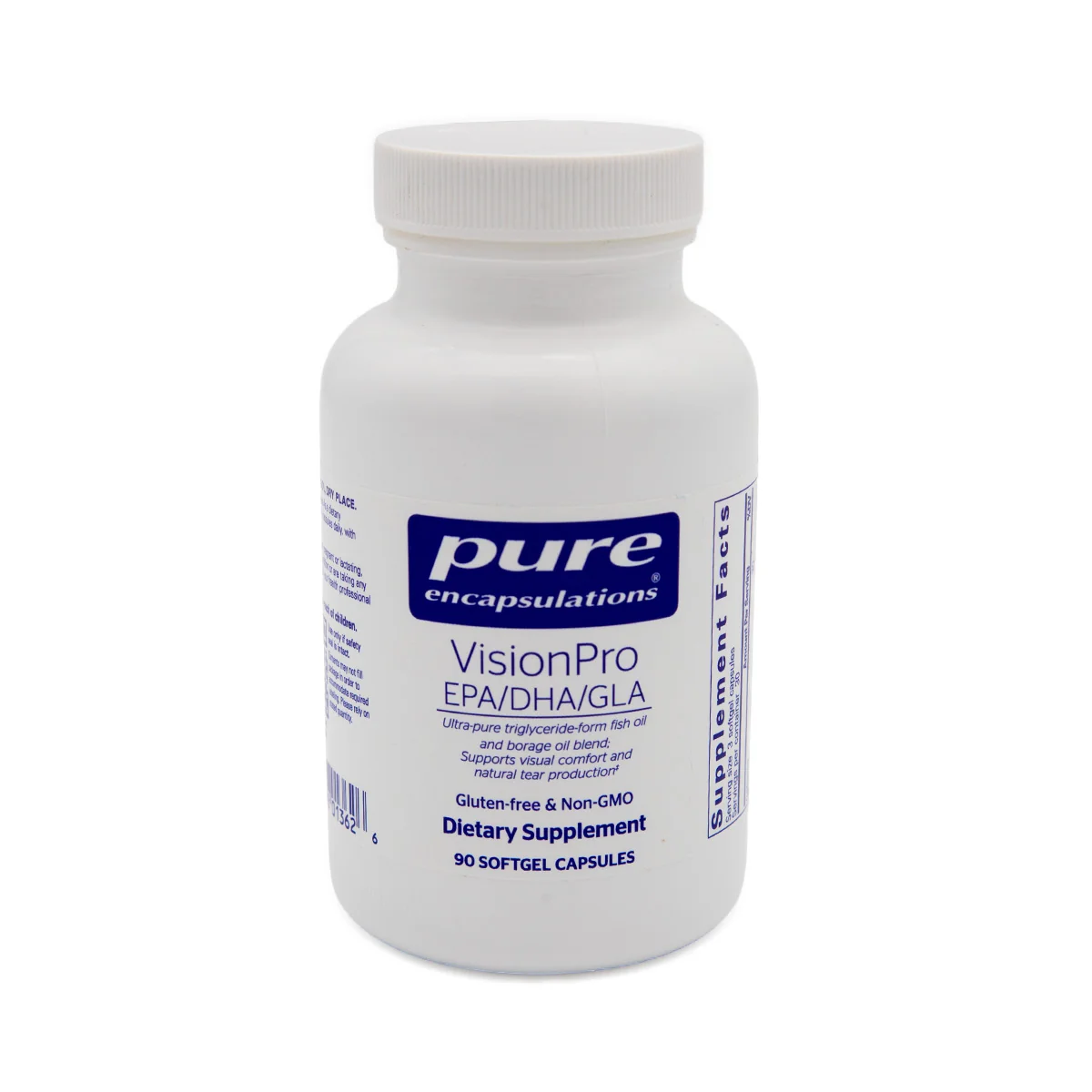 Pure Encapsulations VisionPro EPA/DHA/GLA (90)View product
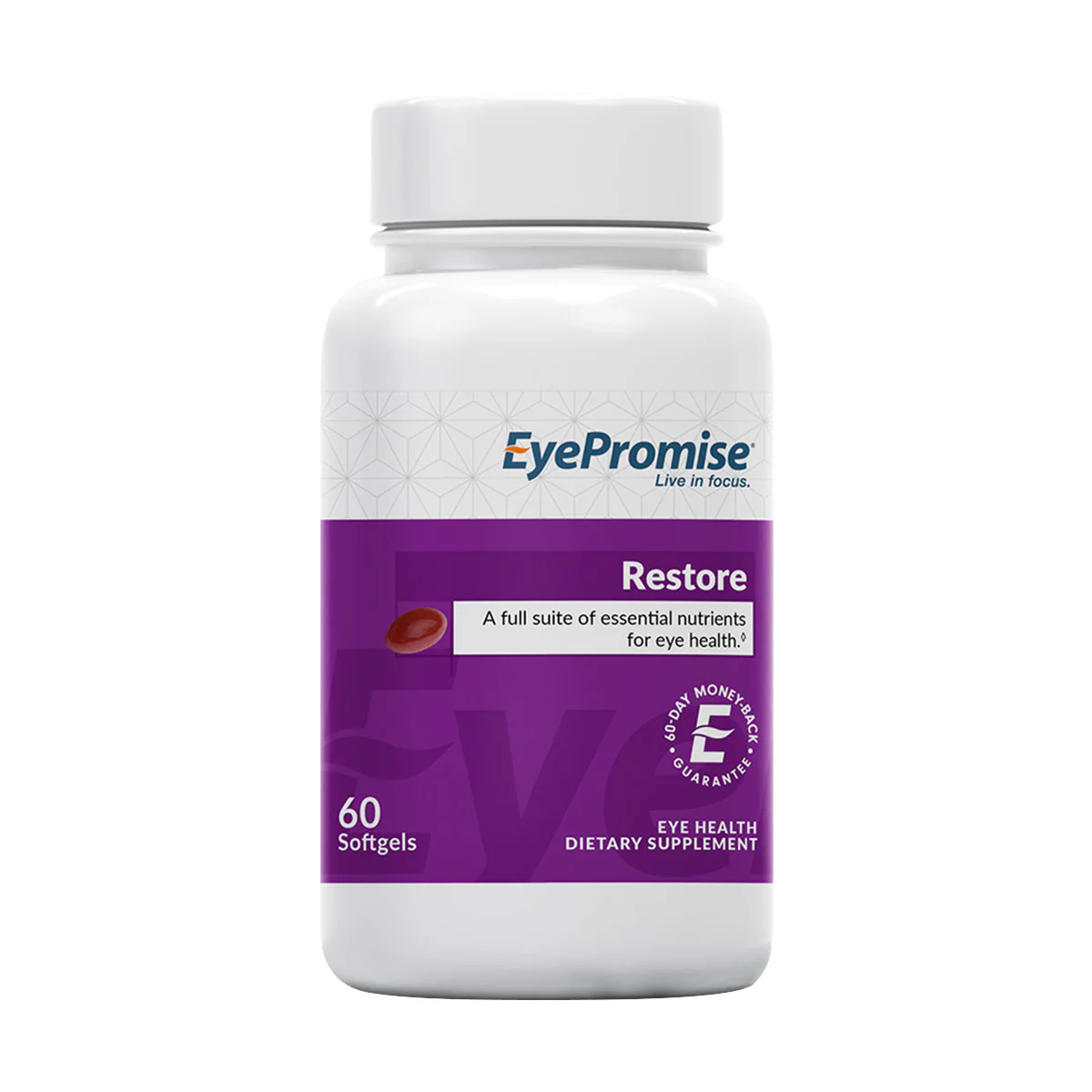 EyePromise Restore (60)View product
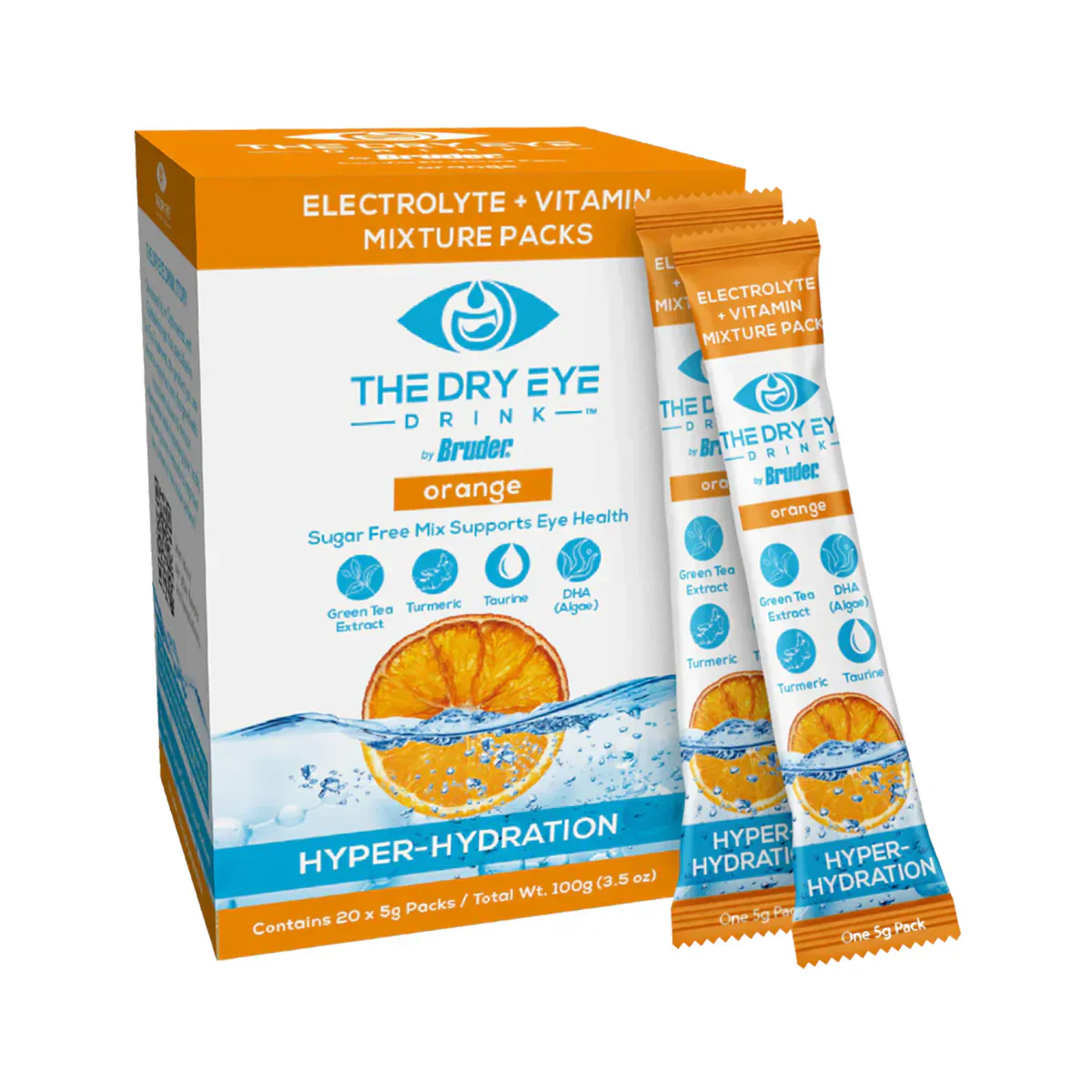 Dry Eye Drink Daytime Mix (orange)View product
Patient goals and where to start.
Daily amounts are taken from each label so products compare like for like.
| Goal | Often helps | Per day, from the label |
|---|---|---|
| A strong everyday omega base | High EPA and DHA in triglyceride form | Nordic ProOmega 2000: EPA 1,125 mg, DHA 875 mg (2 softgels). Fortifeye Super Omega-3 Max: EPA 1,200 mg, DHA 900 mg (2 softgels). PRN De3: EPA plus DHA 2,240 mg in rTG form (3 softgels). |
| Moderate dose from a known brand | Triglyceride fish oil in several sizes | Nordic ProOmega: EPA 650 mg, DHA 450 mg (2 softgels). Bottles of 60, 120 and 180. |
| EPA and DHA in equal amounts | rTG oil labeled with a dry eye dose | MacuHealth TG Omega-3: EPA and DHA in equal parts. The label directs dry eye patients to take 4 softgels a day. |
| One product that covers more | Fish oil with added ingredients | Nordic ProDHA Eye: EPA 360 mg, DHA 845 mg, lutein 20 mg, zeaxanthin 4 mg. EyePromise EZ Tears: EPA 590 mg, DHA 440 mg, with vitamin D, green tea, turmeric and evening primrose oil. |
| Will not take fish oil | Tear-support blend without fish oil | Blink NutriTears: lutein 20 mg, zeaxanthin isomers 4 mg, curcuminoids 200 mg and vitamin D3, all in one softgel a day. |
Amounts reflect one daily serving as labeled. As the labels advise, patients who take blood thinners, or who are allergic to fish or iodine, should talk to their physician first.
Keep a short shelf and route the rest.
Stock the fast movers patients pick up at checkout and route everything else through RescueLink. Nothing slow sits on your shelf, and the refill comes back to your practice.
On your shelf
- A high-dose triglyceride fish oil. PRN De3 sells the most.
- A blend, for example EyePromise EZ Tears
- A fish-oil-free option, for example Blink NutriTears
Through RescueLink
- Bigger supply sizes and other brands
- GLA and ALA formulas
- Monthly refills, all on auto-ship
To compare two omegas, skip the big number on the front of the box. Total the EPA and DHA in one daily serving and look at the oil form. Do that math and a lower sticker price seldom turns out to be a lower cost per gram of EPA and DHA.
Questions doctors ask
Do omega-3s help dry eye?
The evidence is mixed. Participants in a large 2018 trial took 3,000 mg daily for a year, and their symptoms showed no significant difference from an olive oil placebo group. Plenty of practices keep omegas in the plan as a long-term add-on anyway, so set honest expectations with patients.
Why does the form of the oil matter?
Absorption differs by form. In a controlled comparison the re-esterified triglyceride version outperformed ethyl ester, so two labels listing the same milligrams can deliver different amounts.
How should I compare two fish oils?
Total the EPA and DHA in a daily serving, then look at the form and the number of softgels. Nordic ProOmega delivers 1,100 mg in 2 softgels, and PRN De3 delivers 2,240 mg in 3.
What if a patient will not take fish oil?
A fish-oil-free blend such as Blink NutriTears, or a GLA and ALA formula, are the usual options. Plant fatty acids are not equivalent to EPA and DHA, so present them that way.
When is a blend better than plain fish oil?
When the patient wants a single product, or when keeping it simple makes them more likely to stay on it. Blends generally deliver less EPA and DHA than high-dose fish oil does.
Which safety questions should I ask?
Ask about blood thinners and about fish or iodine allergies. Several omega labels tell patients to check with a physician first in those situations.
How do I help patients stay on it?
RescueLink auto-ship keeps the monthly bottle arriving without gaps, and each reorder comes back to your practice.
References (2)
- Dry Eye Assessment and Management Study Research Group; Asbell PA, Maguire MG, et al. n-3 Fatty Acid Supplementation for the Treatment of Dry Eye Disease. N Engl J Med. 2018;378(18):1681-1690. PubMed
- Dyerberg J, Madsen P, Møller JM, et al. Bioavailability of marine n-3 fatty acid formulations. Prostaglandins Leukot Essent Fatty Acids. 2010;83(3):137-141. PubMed
Clinical review
Reviewed by the Medical Advisory Panel, a group of eye care professionals who focus on dry eye and ocular surface disease. Vision Rescue is a licensed pharmaceutical wholesale distributor.
Notes and disclosures
Written for licensed eye care professionals. This guide does not replace clinical diagnosis or treatment, and every decision stays with the treating provider. The groupings and patient-fit notes are a framework only. Use each product according to its current label. These statements have not been evaluated by the Food and Drug Administration. These products are not intended to diagnose, treat, cure, or prevent any disease.
Add nutrition to the plan.
Order at wholesale, and use RescueLink to send patients the exact product between visits.