
Learn
Eye Care Learning Center Every guide, one place.
Three dry eye playbooks plus a guide for every service an optometry or ophthalmology practice can add.

Short version
Where to begin.
Choose the playbook or service guide that fits the question you have today. Each one leads to the detailed pages underneath it. The service guides run from optical, contact lenses and myopia to glaucoma, retina, insurance and surgical co-management, written for eye care practices and their teams.
Points to remember
- The Product Playbook covers what to stock and recommend, category by category.
- The Clinical Playbook covers testing, diagnosis and every in-office device.
- The Practice Playbook covers running dry eye care as a service: workflow, staffing, stocking and economics.
- The service guides cover every other part of eye care a practice can add, one hub per service line.
Three dry eye playbooks.
Each one answers a different question and opens into the guides that support it.
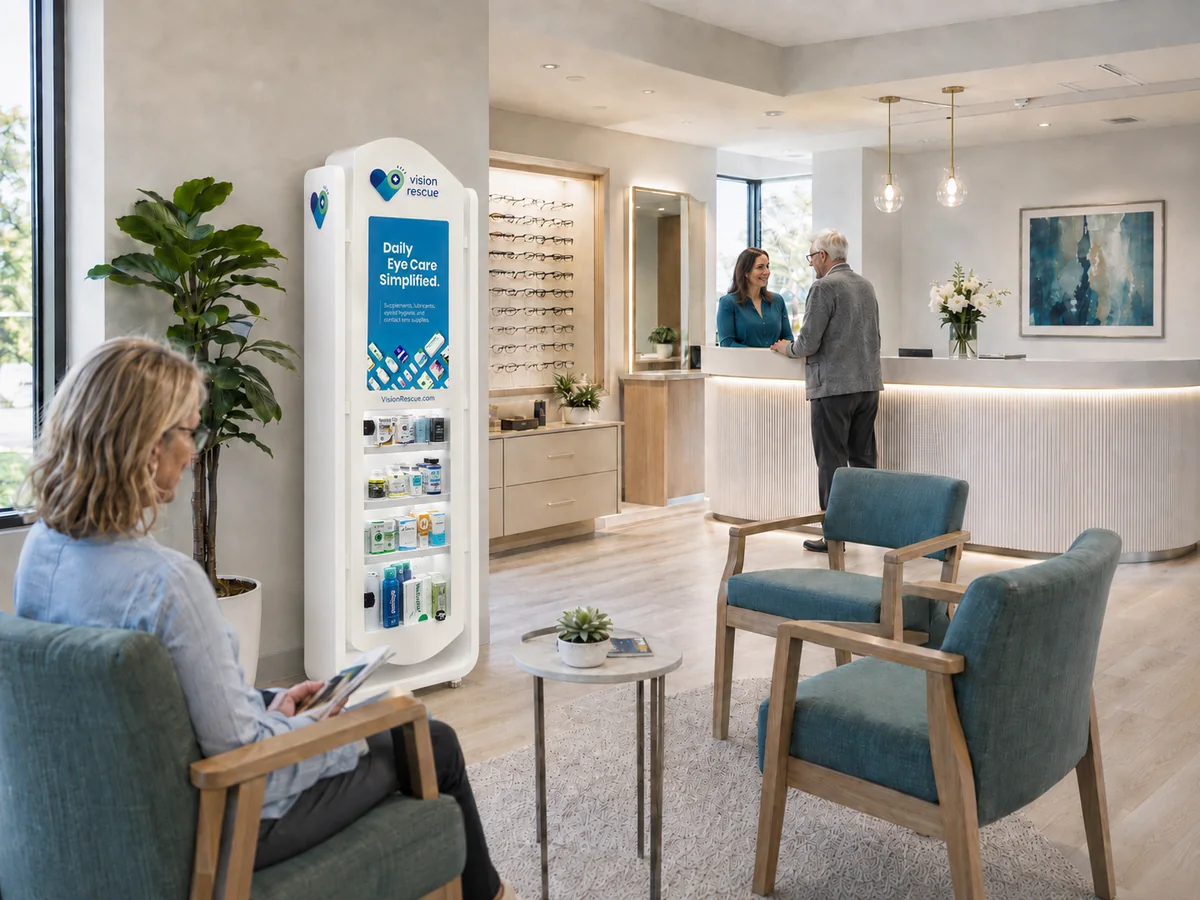 What to stock and recommend
Product Playbook
Every OTC product sorted by job and patient type, top sellers first, plus the clinical guides, comparisons and protocols that support it.
Open the Product Playbook ›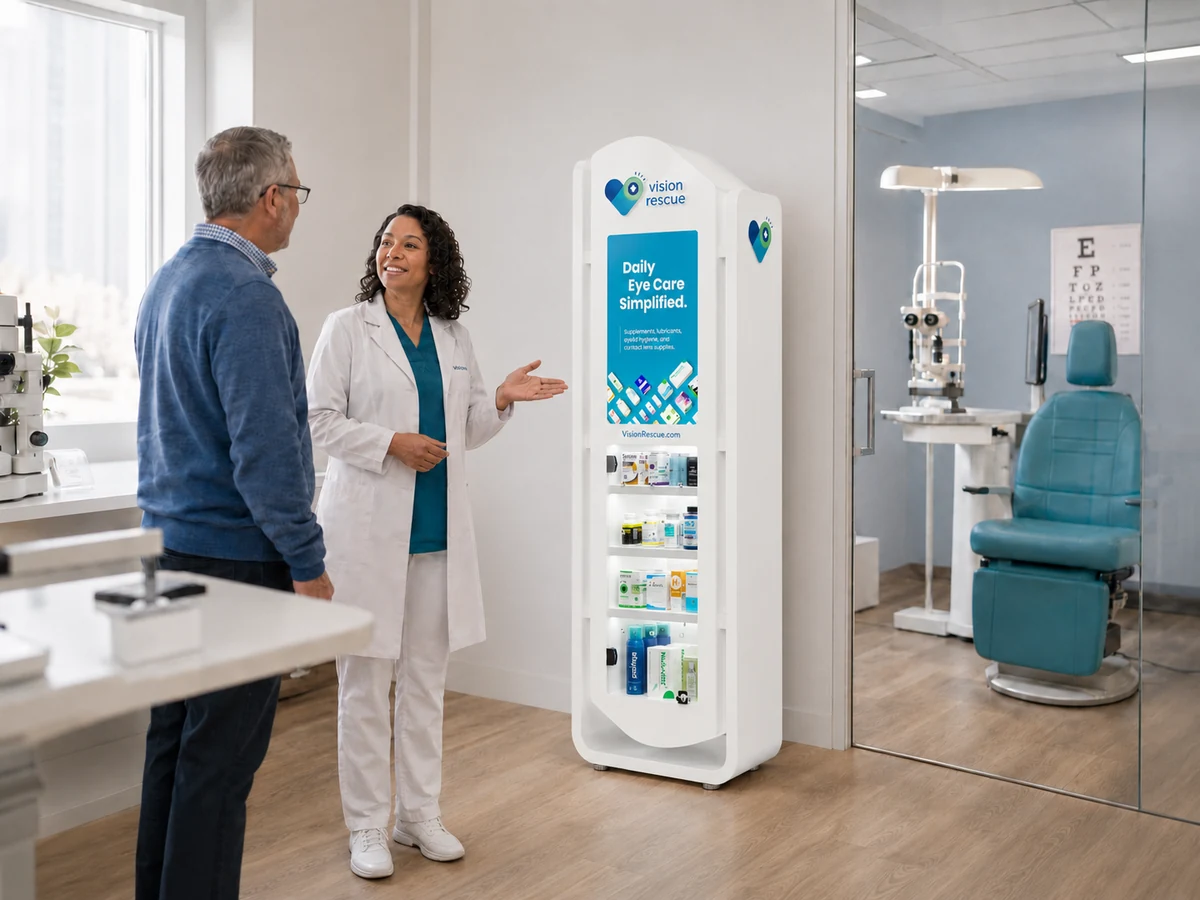 Test, diagnose and treat
Clinical Playbook
The TFOS DEWS III diagnostic workup and a dedicated page for each in-office device and procedure.
Go to the Clinical Playbook › Run it as a service
Practice Playbook
The exam routine, the staff owner, stocking versus shipping, auto-reorder, patient kits, reimbursement and the five-year economics of a dry eye service.
Open the Practice Playbook ›Build and run the practice
The Practice Playbook.
These guides cover how to start, who runs the program, how the visit flows and how the economics work over five years.
What to stock and recommend
The Product Playbook.
What each class of product does, how to compare look-alike options and how to turn them into a protocol your staff can follow.
Test, diagnose and treat
The Clinical Playbook.
The diagnostic workup plus a focused page for each device and procedure you might add.
Dry Eye Diagnostics
Screen, confirm and find the drivers, following TFOS DEWS III.
Read the guide ›Meibomian Gland Expression
Score meibum at a standardized, blink-level force, stage the MGD, then clear the glands.
Read the guide ›In-Office Procedures and Equipment
Every diagnostic and in-office treatment, with what Vision Rescue stocks and what you order direct.
Open the hub ›Diagnostics
Beyond dry eye
Every service you can add.
One hub per service line, each opening into the brands, equipment, coding and business pages behind it.
About Vision Rescue Pro
Programs, policies and sources.
How the free practice account works, how the guides are written and where their facts come from.
Help patients find you. Vision Rescue practices can be listed on the VisionRescue.com Doctor Locator, which points nearby patients to your office. Growing a service and being easy to find go hand in hand.
Open the Doctor Locator ›Treatment paths
The dry eye treatment paths, from home care to surgery
Dry eye care runs from home care to surgery, and many patients use several paths at once. Vision Rescue does not rank these paths; the treating doctor and the patient choose based on severity, the main driver and the patient's circumstances. Based on TFOS DEWS III and the AAO Dry Eye Syndrome PPP.
At-home and OTC care
Lubricant drops, gels and ointments, lid hygiene, warm compresses and nutrition. Usually the base layer at every severity. Recommended by optometrists and ophthalmologists; done by the patient at home.
Product guides ›Prescription therapy
Anti-inflammatory and tear-film drugs such as cyclosporine, lifitegrast and perfluorohexyloctane, varenicline nasal spray, lotilaner for Demodex and short steroid courses. Prescribed by ophthalmologists and optometrists within state scope.
Prescription options ›In-office procedures
Gland expression, thermal pulsation and lid-heating devices, intense pulsed light, light therapy and lid-margin cleaning. Offered in optometry and ophthalmology practices, often run by trained staff.
In-office procedures ›Punctal occlusion
Temporary or long-lasting plugs that keep the patient's own tears on the eye, and permanent closure by thermal cautery when plugs are not enough. Plugs placed by ODs and MDs where state scope allows; cautery closure is a surgical step, usually by an ophthalmologist.
Punctal plugs ›Advanced and surgical care
For severe disease: autologous serum drops, amniotic membrane, scleral lenses and eyelid surgery such as tarsorrhaphy. Often cornea and oculoplastic specialists, with the co-managing OD or MD.
Scleral lenses ›Questions doctors ask about the Learning Center
Who is the Learning Center written for?
Eye care professionals and their teams: optometrists, ophthalmologists, owners, office managers and technicians building or growing services across eye care.
Where should I begin?
With the playbook or service guide that matches your question. For dry eye, the Product Playbook covers what to stock and recommend, the Clinical Playbook covers testing, diagnosis and in-office treatment, and the Practice Playbook covers running it as a service. For anything else, open the matching service guide.
How do the playbooks differ?
The Product Playbook is about the products themselves, with clinical guides, comparisons and protocols. The Clinical Playbook is about the diagnostic workup and the devices and procedures used in the office. The Practice Playbook is about workflow, staffing, inventory, reimbursement and economics.
Do I need an account to read the guides?
No. Anyone can read them. An approved wholesale account is only needed to see your pricing and place orders.
Do the guides replace my clinical judgment?
No. They are educational material reviewed by the Medical Advisory Panel, and current labeling is always the reference for device and drug details.
How do patients find my practice?
Vision Rescue practices can appear on the VisionRescue.com Doctor Locator, which sends nearby patients to your office.
Can my staff use these too?
Yes. The guides are written for the whole office, including the team members who run chairside workflow, dispensing and reorders.
How often is the content updated?
The Medical Advisory Panel reviews it periodically, and pages are updated as products, evidence and labeling change.
How do I open a wholesale account?
Apply for an account to unlock wholesale pricing and ordering across the catalog. Provider Relations can help you get set up.
Is the Learning Center written for optometrists or ophthalmologists?
Both. The guides are written for optometry and ophthalmology practices and their teams, from primary eye care to cornea, glaucoma, retina and surgical co-management. Scope of practice for each service varies by state.
Clinical review
Content is reviewed by the Medical Advisory Panel, a group of eye care professionals who focus on dry eye and ocular surface disease. Vision Rescue is a licensed pharmaceutical wholesale distributor.
Notes and disclosures
Educational material for eye care professionals that supports, and does not replace, your own clinical judgment. Statements about dietary supplements have not been evaluated by the Food and Drug Administration, and those products are not intended to diagnose, treat, cure, or prevent any disease. Check device and drug details against current FDA labeling and the manufacturer's instructions before use. Product and brand names are trademarks of their respective owners.
Pick a playbook.
Each one covers a different part of the work: choosing what to stock and recommend, setting up testing and in-office treatment, or running dry eye care as a service.
Stay current: Latest eye care industry news