







Lower inflammatory mediators
Studies show lower levels of pro-inflammatory mediators after treatment.
Liu et al. 2017; Yin et al. 2018In-office procedures · Intense pulsed light
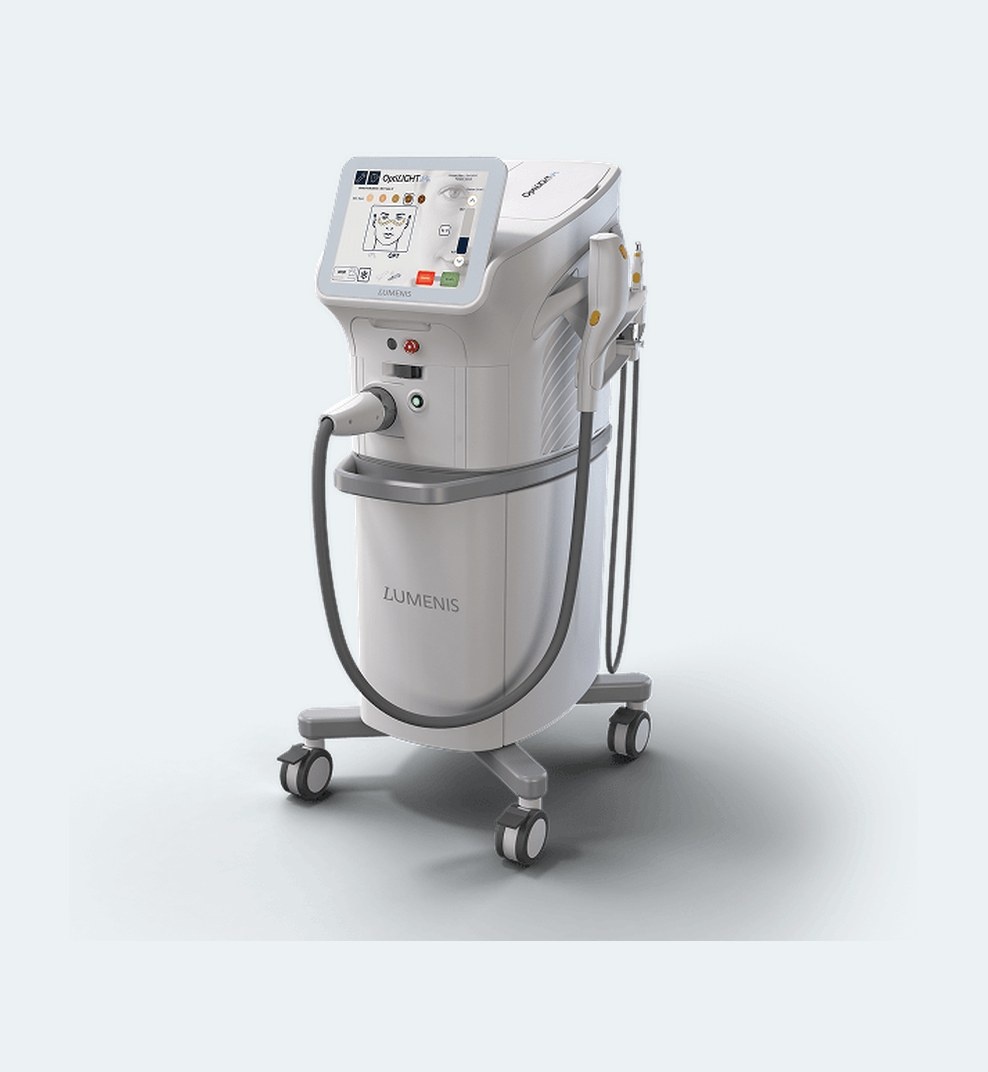
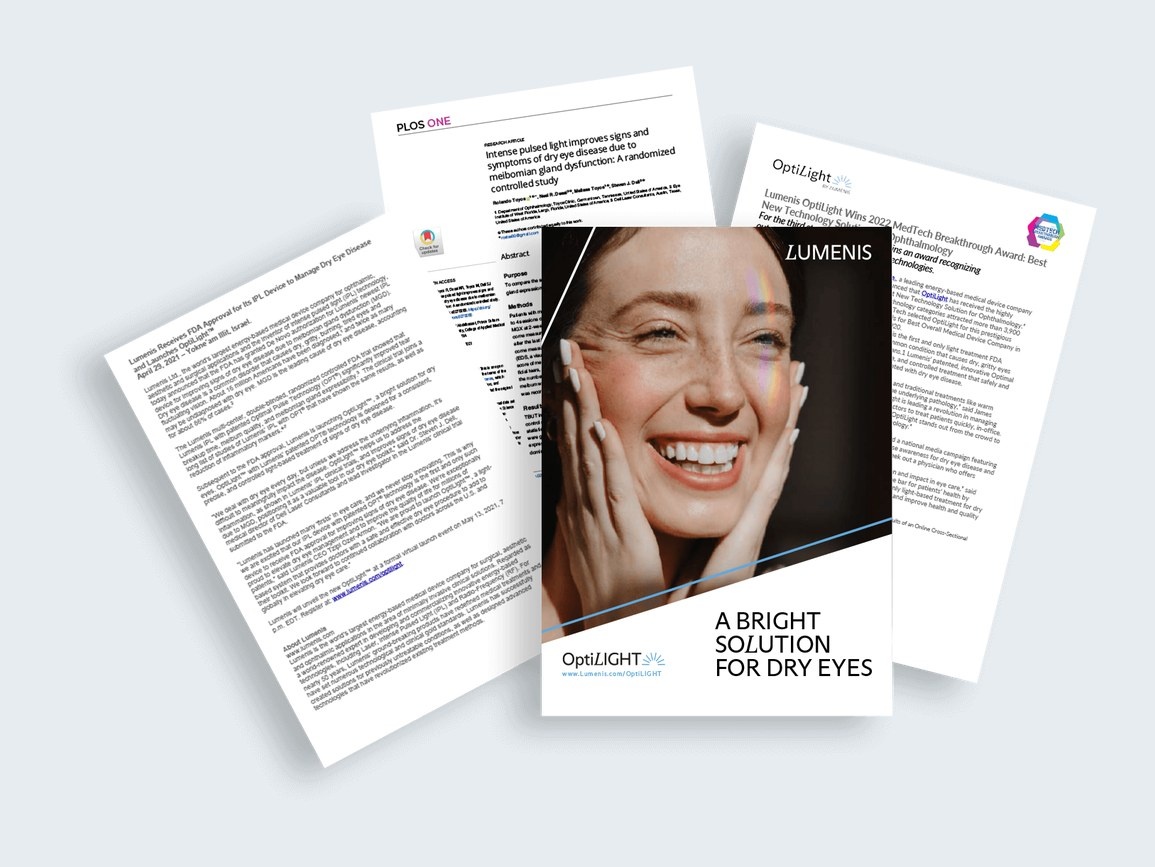
OptiLight is the first and only IPL FDA approved for the management of dry eye disease due to meibomian gland dysfunction (MGD). Each in-office session runs about 15 minutes on Lumenis' patented Optimal Pulse Technology (OPT™).
Dry eye due to MGD has several drivers, and OptiLight is designed to act on five of them in the same session.
Studies show lower levels of pro-inflammatory mediators after treatment.
Liu et al. 2017; Yin et al. 2018Studies report longer tear breakup time along with lower tear osmolarity.
Dell et al. 2017; Toyos & Briscoe 2016Targets the abnormal vessels that help keep inflammation going.
Kassir et al. 2011; Papageorgiou et al. 2008Studies show better meibomian gland morphology and function.
Yin et al. 2018Studies show fewer Demodex mites, which are linked to infection and a heavier bacterial load on the lids.
Prieto et al. 2002Lumenis' patented handpieces and Optimal Pulse Technology keep every pulse targeted, uniform and controlled, even on the thin skin under the eyes.
Steady energy with no spikes, so each pulse stays targeted, uniform and controlled.
Follows the contours of each patient's face, with coverage designed for the delicate skin below the eyes.
Covers wider areas, with continuous contact cooling for comfort and safety.
Optimizes the light energy reaching delicate areas and keeps each session safe and hygienic.
Light is applied across the malar region from tragus to tragus, including the nose, with the patient's eyes fully covered by protective eyewear.
Each session takes roughly 15 minutes in the chair.
Four sessions make up a course, designed for results that last.
Some redness can appear and usually clears within a few hours. Patients return to daily activities as their doctor advises.
| Wavelength | 590 to 1200 nm, through a 590 nm cut-off filter |
|---|---|
| Standard IPL wavelength range | 400 to 1200 nm |
| Maximal fluence | 35 J/cm² |
| Lightguides | 15 × 35 mm, 8 × 15 mm, 6.4 mm Ø |
| Cooling | Continuous contact cooling, IPL handpiece (SapphireCool™) |
| Procedure time | About 15 minutes |
| Treatment course | 4 sessions |
US: Improvement of signs of Dry Eye Disease (DED) due to Meibomian Gland Dysfunction (MGD), also known as evaporative dry eye or lipid deficiency dry eye, in patients 22 years of age and older with moderate to severe signs and symptoms of DED due to MGD and with Fitzpatrick skin types I-IV.
Used in conjunction with other modalities, such as meibomian gland expression, artificial tear lubricants and warm compresses. Applied to the malar region of the face, from tragus to tragus including the nose, while the eyes are fully covered by protective eyewear.
EU: Evaporative Dry Eye Disease (DED), also known as dry eye syndrome or lipid tear deficiency, due to Meibomian Gland Dysfunction (MGD). This indication is intended for Fitzpatrick skin types I-V.
Diagnostics
ANTARES from Lumenis is an automated dry eye diagnostic platform and corneal topographer.
It applies precise, intense broad-spectrum light across the cheeks and nose to treat dry eye due to MGD, as part of a protocol that also includes gland expression, lubricants and warm compresses.
OptiLight was the first IPL to be FDA approved for managing dry eye due to MGD, and it remains the only one.
A patented OPT handpiece, an ergonomic IPL handpiece with SapphireCool contact cooling, Optimal Pulse Technology, settings tailored to each patient and established treatment protocols.
About 15 minutes, and a full course is 4 treatments.
Some redness can appear and usually fades within a few hours. Patients go back to daily activities as their doctor advises.
OPT delivers energy with no-spike consistency, so treatment stays targeted, uniform, precise and controlled, including on the delicate skin below the eyes.
590 to 1200 nm, through a 590 nm cut-off filter.
Lumenis sells OptiLight direct, with training and support included. The lubricants used alongside it at home are in the artificial tears and lubricants guide.
OptiLight, OPT™, SapphireCool™ and ANTARES are trademarks of Lumenis. Vision Rescue does not sell this device. Read the complete Lumenis instructions for use, including every warning, precaution, contraindication and possible side effect, before treating. Individual results vary.