
Warmth from within
LM LLLT is designed to produce localized heat across the face and lids by stimulating ATP production in skin cells.
In-office procedures · Light therapy
Equinox, from Essilor Instruments, delivers low-level light therapy in the office with red, blue and yellow LED masks.
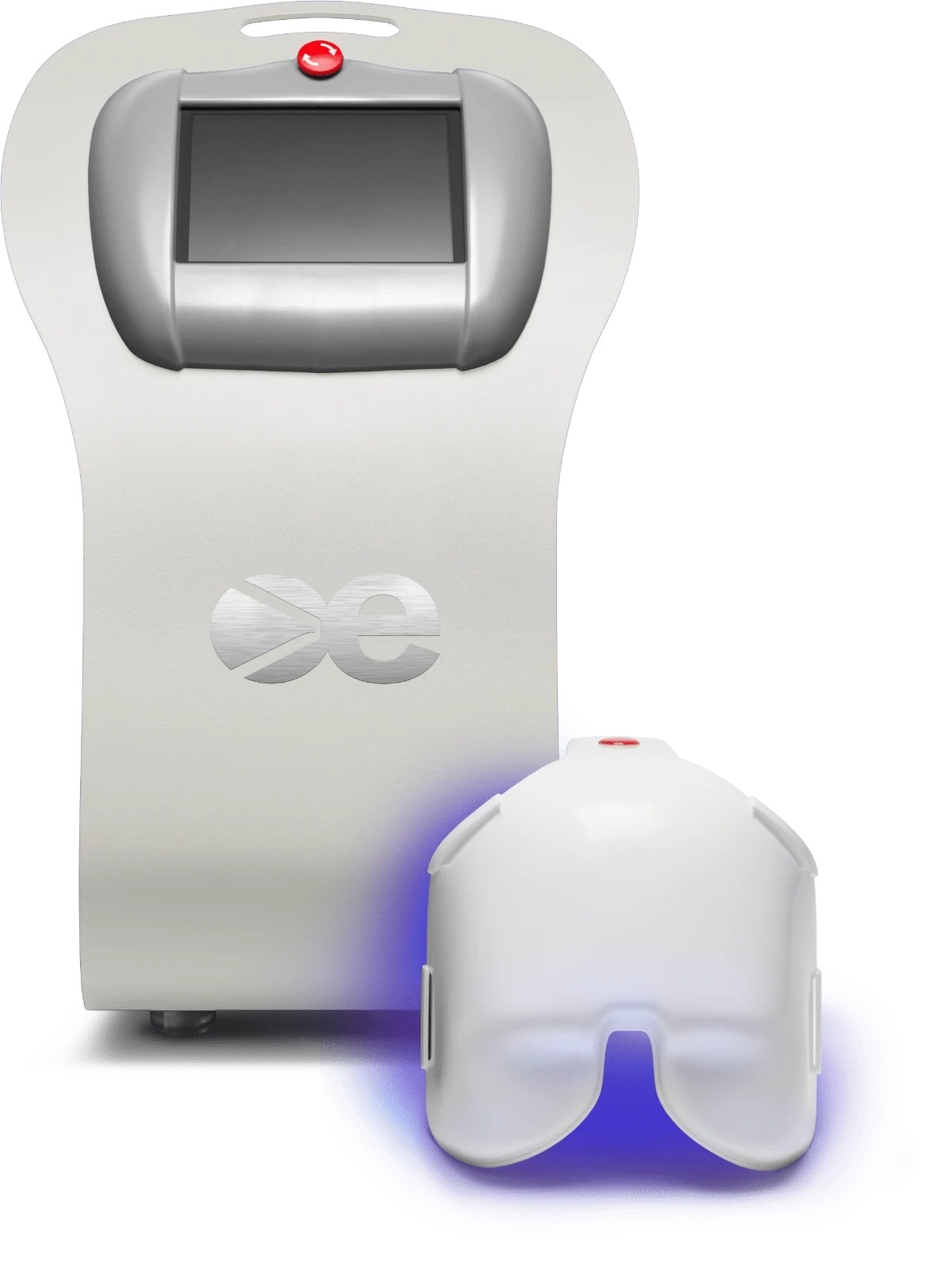
Low-level light therapy is offered in optometry and ophthalmology practices, often alongside other MGD treatments. Equinox relies on LM LLLT, short for Light Modulation low-level light therapy, which is designed to generate warmth from inside the tissue by stimulating ATP production in skin cells.
LM LLLT is designed to produce localized heat across the face and lids by stimulating ATP production in skin cells.
Intended to help calm inflammation and stimulate ATP production.
Intended to help target bacteria.
Intended to support drainage and help ease swelling.
A painless 15 minute session, by design.
A periocular LED mask system built for eye care practices.
The Essilor Instruments LM LLLT unit. It powers the mask the patient wears across the face and lids, one 15 minute session at a time.
Red, blue and yellow masks, each good for 500 sessions, that interchange on one console. The red mask's total fluence is 100 J/cm², emitted at 100 mW/cm².
Non-invasive and short enough to fit inside a regular office visit.
The patient rests with the LED mask over the face and lids for 15 minutes.
The red, blue and yellow masks change on one console, and each lasts 500 sessions.
| Equinox treatment time | 15 minutes |
|---|---|
| Equinox red light total fluence | 100 J/cm² |
| Equinox red light emission power | 100 mW/cm² |
| Equinox masks | LED Mask (Red), LED Mask (Blue), LED Mask (Yellow) |
| Equinox mask life | 500 treatments per mask |
Indicated for the application of localized heat on the facial area, including the eyelids, when recommended by a medical professional.
Treatment paths
Dry eye care runs from home care to surgery, and many patients use several paths at once. Vision Rescue does not rank these paths; the treating doctor and the patient choose based on severity, the main driver and the patient's circumstances.
Lubricant drops, gels and ointments, lid hygiene, warm compresses and nutrition. Usually the base layer at every severity.
Recommended by optometrists and ophthalmologists; done by the patient at home. Product guides ›
Anti-inflammatory and tear-film drugs such as cyclosporine, lifitegrast and perfluorohexyloctane, varenicline nasal spray, lotilaner for Demodex and short steroid courses.
Prescribed by ophthalmologists and optometrists within state scope. Prescription options ›
Gland expression, thermal pulsation and lid-heating devices, intense pulsed light, light therapy and lid-margin cleaning.
Offered in optometry and ophthalmology practices, often run by trained staff. In-office procedures ›
Temporary or long-lasting plugs that keep the patient's own tears on the eye, and permanent closure by thermal cautery when plugs are not enough.
Plugs placed by ODs and MDs where state scope allows; cautery closure is a surgical step, usually by an ophthalmologist. Punctal plugs ›
For severe disease: autologous serum drops, amniotic membrane, scleral lenses and eyelid surgery such as tarsorrhaphy.
Often cornea and oculoplastic specialists, with the co-managing OD or MD. Scleral lenses ›
Sources: TFOS DEWS III Management and Therapy (2025) · AAO Dry Eye Syndrome PPP (2023)
Manufacturers
Logos link to each company's website and appear in alphabetical order, at the same size, for identification only.

Fifteen minutes.
It is designed to generate warmth from inside the tissue by stimulating ATP production in skin cells.
Red is intended to help calm inflammation and stimulate ATP production, blue to help target bacteria, and yellow to support drainage and help ease swelling.
Both. Low-level light therapy is offered in optometry and ophthalmology practices, and often run by trained staff under the doctor's direction. Who may perform it depends on state scope of practice and the manufacturer's training requirements.
Reach out to Essilor Instruments about adding Equinox to your practice.
Stay current: Latest eye care industry news
Equinox is a trademark of Essilor Instruments USA. Read the complete manufacturer instructions for use, including every warning, precaution and contraindication, before use. Individual results vary. Photo: Essilor Instruments USA.