Margin and lashes
The spinning micro sponge tip works along the lid margin and the lash line.
In-office procedures · Lid margin cleaning
Optometry and ophthalmology practices use a powered handpiece with a spinning, disposable micro sponge tip to clean the lid margin.
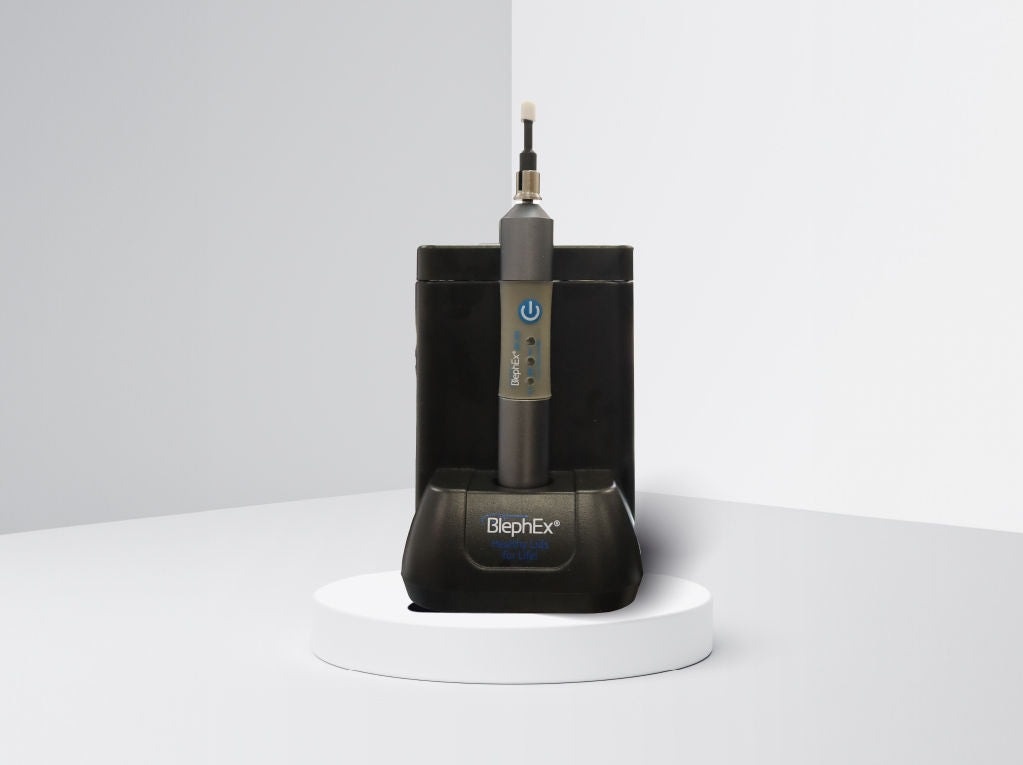
BlephEx is performed chairside at a scheduled visit, and the professional holds and guides the handpiece from start to finish.
The spinning micro sponge tip works along the lid margin and the lash line.
A licensed eye care professional runs the device and keeps it in hand the whole time.
Each eye gets its own tip, and both go in the trash when the procedure ends.
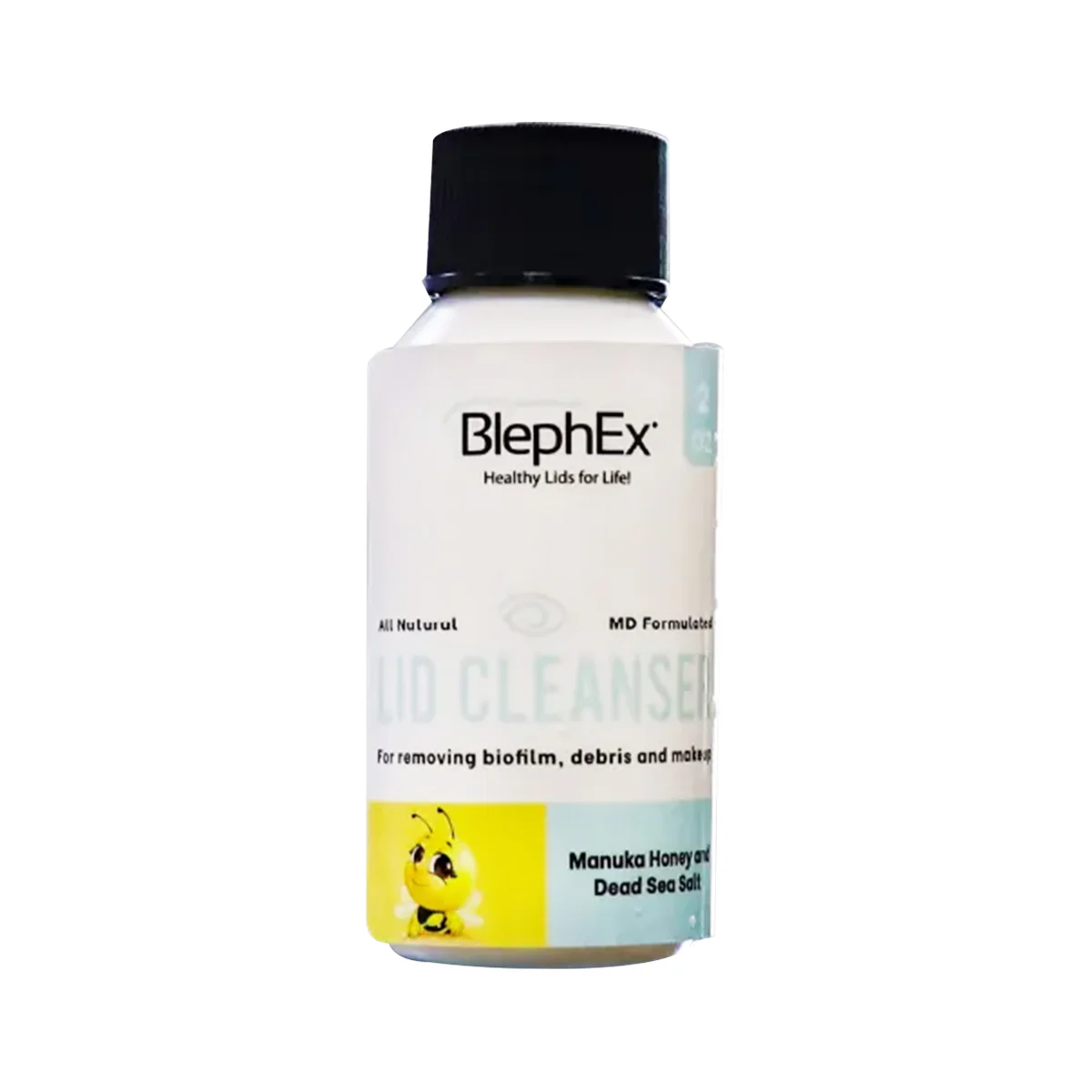
Patients leave with BlephEx Lid Cleanser foam so the daily lid routine carries on between visits.
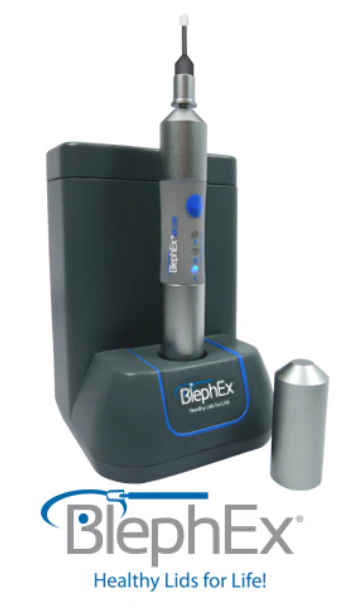
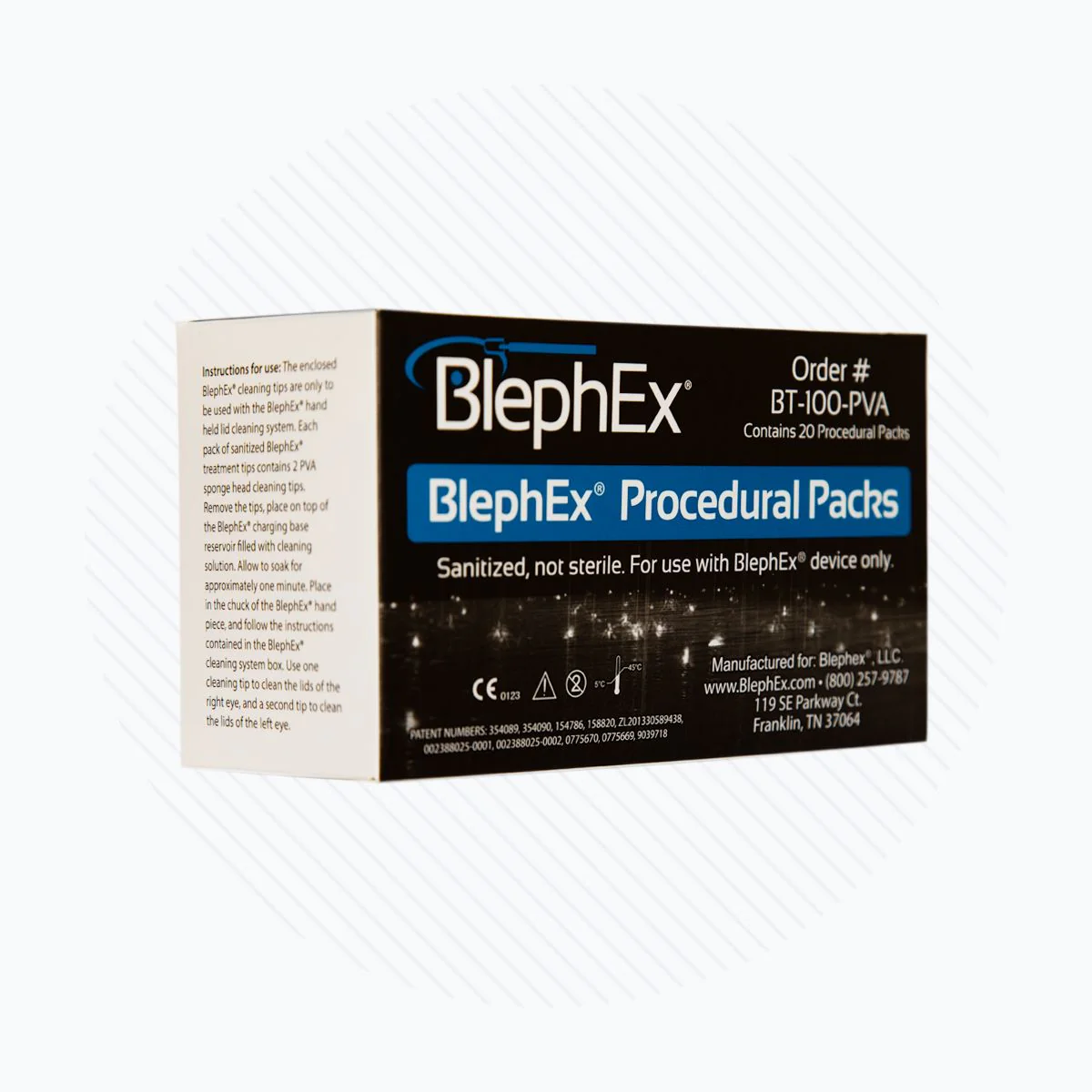
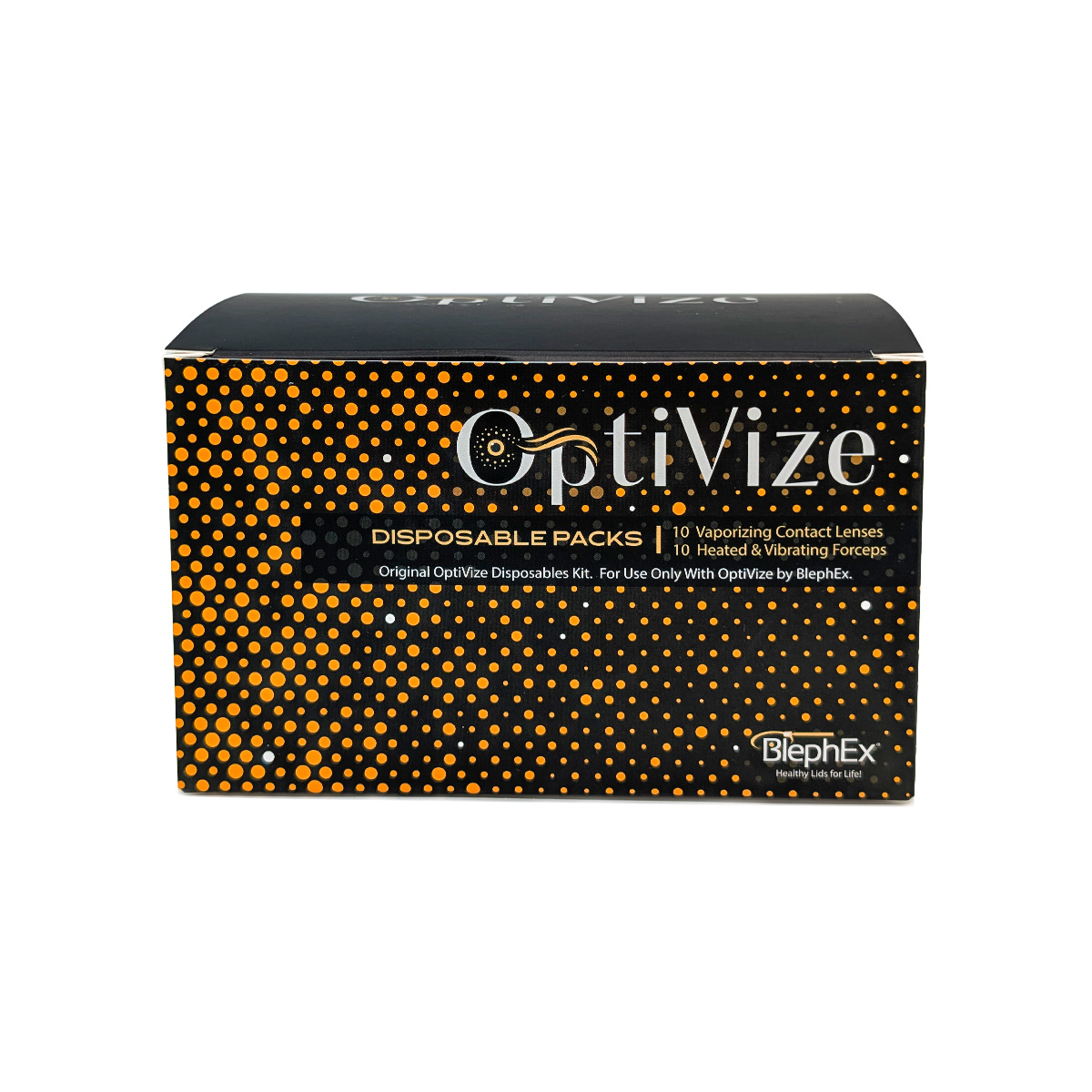
A handpiece with its charger, single-use tip packs, a chairside cleanser and OptiVize, which is a separate system.
The powered handpiece and its charging base, sold in Choice, Pinnacle and Value packages.
Two disposable micro sponge tips per pack, one per eye. They are sanitized rather than sterile and are used once.
Kept at the chair for procedures. The sponge tip soaks it up fast, which can trim procedure time.
An in-office system of its own, separate from the BlephEx handpiece, with dedicated single-use lenses and forceps.
Only licensed eye care professionals perform it, in the clinic and according to the BlephEx IFU.
Attach a fresh micro sponge tip from a tip pack, and apply the liquid cleanser to it if you choose.
Run the spinning tip along the lid margin and lash line, with the handpiece in professional control throughout.
One tip per eye, then both are thrown away. At home the patient keeps going with the foam cleanser.
| Handpiece packages | Choice, Pinnacle, Value |
|---|---|
| Handpiece set includes | Handheld BlephEx device, charging station |
| Procedural tip packs | 20 packs per box, 2 tips per pack, 40 tips |
| Tips | Disposable micro sponge, sanitized (not sterile), single use |
| OptiVize disposables | 10 lenses and 10 forceps per box, 10 procedures, single use |
| BlephEx Lid Cleanser | 1.7 oz foam for home use, 2 oz liquid for in-office use |
| Setting | Professional in-office use by a licensed eye care professional |
BlephEx and OptiVize come from Meibum Scientific. The company's dry eye and MGD platform combines in-office devices with home care, centered on biofilm at the lid margin and within the meibomian glands.

Treatment paths
Dry eye care runs from home care to surgery, and many patients use several paths at once. Vision Rescue does not rank these paths; the treating doctor and the patient choose based on severity, the main driver and the patient's circumstances.
Lubricant drops, gels and ointments, lid hygiene, warm compresses and nutrition. Usually the base layer at every severity.
Recommended by optometrists and ophthalmologists; done by the patient at home. Product guides ›
Anti-inflammatory and tear-film drugs such as cyclosporine, lifitegrast and perfluorohexyloctane, varenicline nasal spray, lotilaner for Demodex and short steroid courses.
Prescribed by ophthalmologists and optometrists within state scope. Prescription options ›
Gland expression, thermal pulsation and lid-heating devices, intense pulsed light, light therapy and lid-margin cleaning.
Offered in optometry and ophthalmology practices, often run by trained staff. In-office procedures ›
Temporary or long-lasting plugs that keep the patient's own tears on the eye, and permanent closure by thermal cautery when plugs are not enough.
Plugs placed by ODs and MDs where state scope allows; cautery closure is a surgical step, usually by an ophthalmologist. Punctal plugs ›
For severe disease: autologous serum drops, amniotic membrane, scleral lenses and eyelid surgery such as tarsorrhaphy.
Often cornea and oculoplastic specialists, with the co-managing OD or MD. Scleral lenses ›
Sources: TFOS DEWS III Management and Therapy (2025) · AAO Dry Eye Syndrome PPP (2023)
Manufacturers
Logos link to each company's website and appear in alphabetical order, at the same size, for identification only.

Twenty. The box holds 20 patient packs with 2 tips each, for 40 tips.
No. They are sanitized and single use. Use a separate tip for each eye and throw both away afterward.
The liquid, which is made for in-office use and soaks into the tip quickly. Patients take the foam home for the days between visits.
No. It is its own in-office system, with dedicated single-use lenses and forceps.
Licensed eye care professionals, in the clinic, working from the BlephEx IFU.
The maker of BlephEx and OptiVize. Its dry eye and MGD platform combines in-office devices with home care such as BlephEx Lid Cleansers and Quell Eye Drops.
BlephEx clears biofilm and debris from the lid margin and lash line, while OptiVize is designed to address biofilm within the meibomian glands. They are separate systems, and many practices use both in one protocol.
Vision Rescue carries Quell Eye Drops. LashCam is sold through BlephEx.
Both. BlephEx is offered in optometry and ophthalmology practices. Per the IFU, a licensed eye care professional performs it, within state scope of practice.
Order the handpiece, tip packs, OptiVize disposables and lid cleanser at wholesale from Vision Rescue.
Stay current: Latest eye care industry news
BlephEx and OptiVize are trademarks of BlephEx, LLC. Read the complete manufacturer instructions for use, including every warning, precaution and contraindication, before use. Individual results vary. Photo: BlephEx, LLC.