








Non-invasive
The only stimulus is room air at a controlled pressure.
In-office procedures · Diagnostic device
Brill's Corneal Esthesiometer is a portable, non-invasive instrument that tests corneal sensitivity using metered puffs of air. It is designed to help catch a loss of corneal sensation, support earlier treatment and track whether treatment is working.
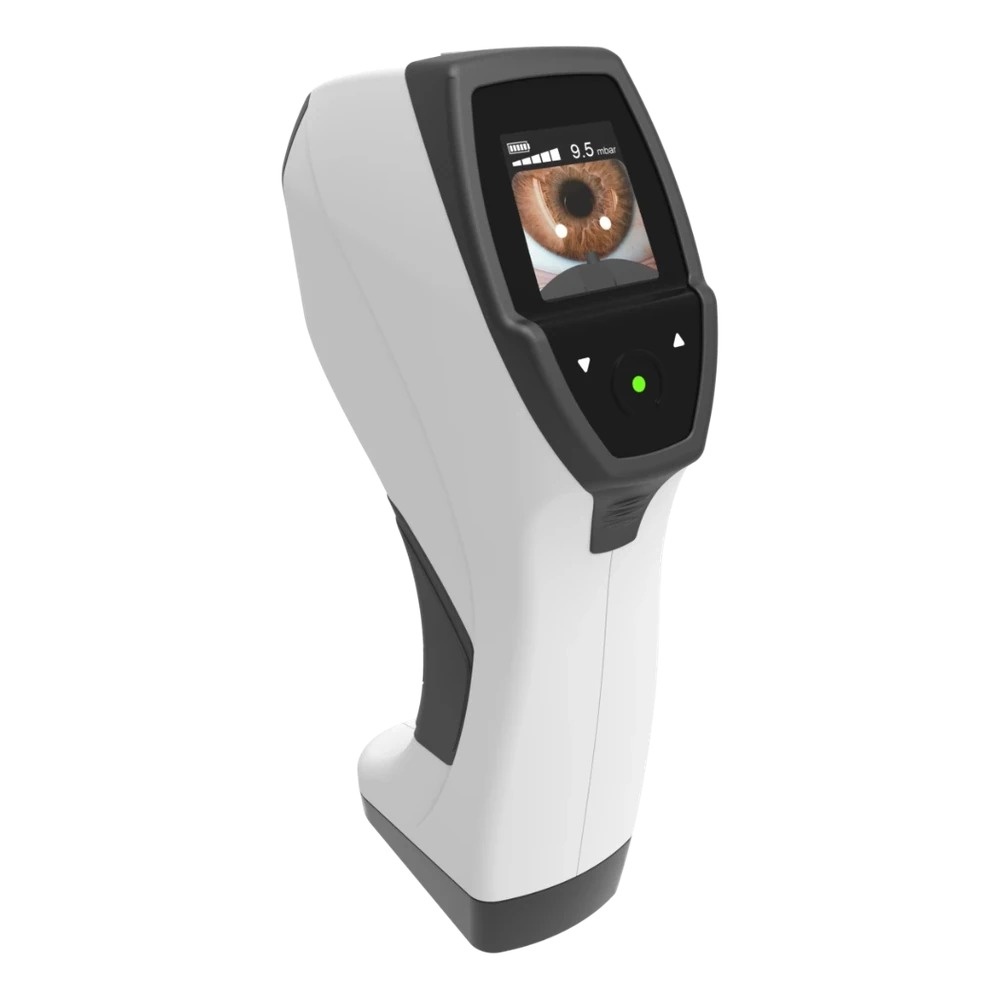
Air is delivered to the cornea at five set pressures. The patient says when they feel it, and the first level they notice is the measure of corneal sensitivity.
The only stimulus is room air at a controlled pressure.
The instrument never touches the cornea, so patients with infectious corneal disease can still be tested.
A built-in camera and two infrared LEDs meet at one point on the cornea when the distance is right.
In a multicenter study of 91 subjects, differences within and between observers were not statistically significant.
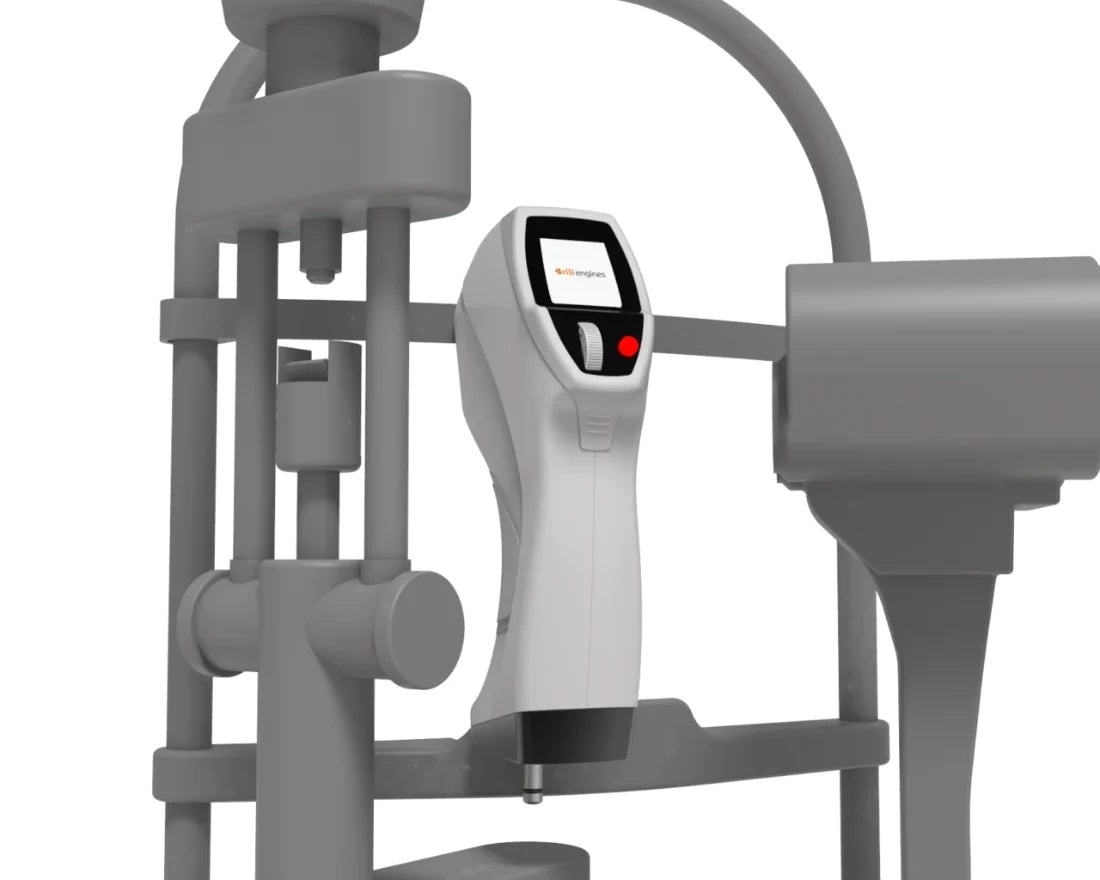
Renedo Laguna et al. 2025A compact hand-held unit that also mounts on the slit lamp.
Use it one-handed with your thumb on the controls, or fit it to a standard slit lamp.
Shows the live eye image, the chosen stimulus level and the pressure delivered, in millibars.
Changes the stimulus level and triggers each air pulse.
The digitally compensated pressure sensor is calibrated at the factory, so there is no calibration or routine upkeep.
No anesthetic is used. Begin at the lowest pressure and go up one step at a time until the patient feels the air.
Have the patient sit upright, glasses off, blinking and breathing as usual. Lens wearers should leave lenses out for 24 hours or more. A puff on the back of the hand shows the patient what it feels like.
Hold the unit upright or mount it on the slit lamp, then adjust the distance until the two LEDs meet as one point on the cornea.
Begin at level 1 and fire once the shoot button glows steady green. Raise the level one step at a time until the patient feels the pulse.
| Model | 002 |
|---|---|
| Stimulus levels | 5 |
| Pressure range | Approximately 2.5 to 10 mbar |
| Display unit | Millibars (mbar) |
| Esthesiometer dimensions | 56 mm W x 203 mm H x 135 mm L |
| Esthesiometer weight | 600 g |
| Charging dock | 70 mm W x 114 mm H x 123 mm L, 560 g |
| Battery | 2 lithium-ion cells in series, 3.6 V each; replace approximately every 2 years |
| Operating conditions | 10 to 35 °C, 30% to 90% relative humidity |
| Equipment lifespan | 10 years |
| In the case | Esthesiometer, charging dock, power adaptor, remote control, instructions for use |
| Guarantee | 2 years from invoice date |
Corneal Esthesiometer Brill is a non-invasive device designed to assess the corneal sensitivity of the human eye by healthcare professionals (ophthalmologists and eye health staff) for aid in diagnosis of impairment of corneal sensation. It can detect an alteration in corneal sensitivity and help healthcare professionals determine whether current treatment is effective.
How sensitive the cornea is to a stimulus. The corneal epithelium has more free nerve endings than any other tissue in the body, most of them supplied by the ophthalmic branch of the trigeminal nerve.
Dry eye disease, contact lens wear, diabetic keratopathy, herpes simplex keratitis, neurotrophic keratopathy, keratoconus, Fuchs' endothelial corneal dystrophy, and procedures such as LASIK, LASEK and corneal cross-linking.
Early on, nerve density and sensitivity can both rise. As the disease advances, nerve density can drop and the cornea can become less sensitive.
No. The exam does not need one, and an anesthetic can skew the result.
Its pressure levels were modeled on Cochet-Bonnet values. A comparison study found good agreement and a similar range in healthy and dry eyes, though readings from the two are not interchangeable.
No. Brill Engines sells the esthesiometer directly and handles purchasing and training.
A portable, non-contact esthesiometer with five stimulus steps that works in the hand or on the slit lamp.
Corneal Esthesiometer Brill is a trademark of Brill Engines. Read the complete manufacturer instructions for use, including every warning, precaution and contraindication, before use. Individual results vary.