1.25 g/mm²standardized force, close to a natural blink
4 minof lid warming per session, at minimum
Diagnostic versus therapeutic.
Blocked glands are packed with meibum too thick to flow without help. A diagnostic press reveals how advanced the dysfunction is, and a therapeutic press works to empty the glands. Clinicians have been expressing glands in the office for roughly 80 years, and optometrists and ophthalmologists both do it, from primary eye care to cornea practices.
Diagnostic expression
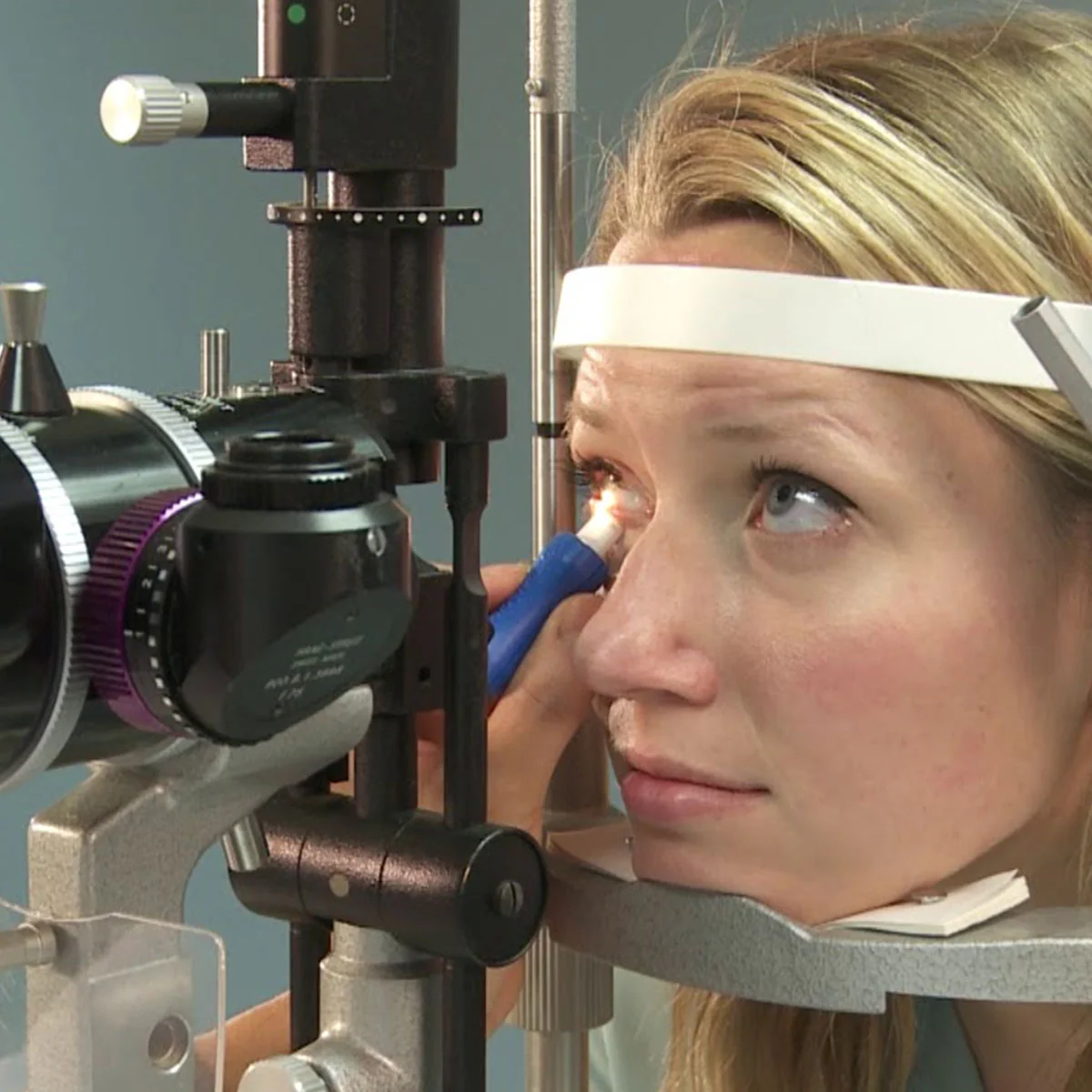
Performed first, to confirm MGD and gauge its severity. Hold gentle pressure on the lower lid with a fingertip or cotton-tip applicator for roughly 5 to 15 seconds while you watch the orifices under the slit lamp. The middle and nasal parts of the lower lid tell you the most.
Scores both meibum quality and how many glands express
Standardized, blink-level force using the Meibomian Gland Evaluator
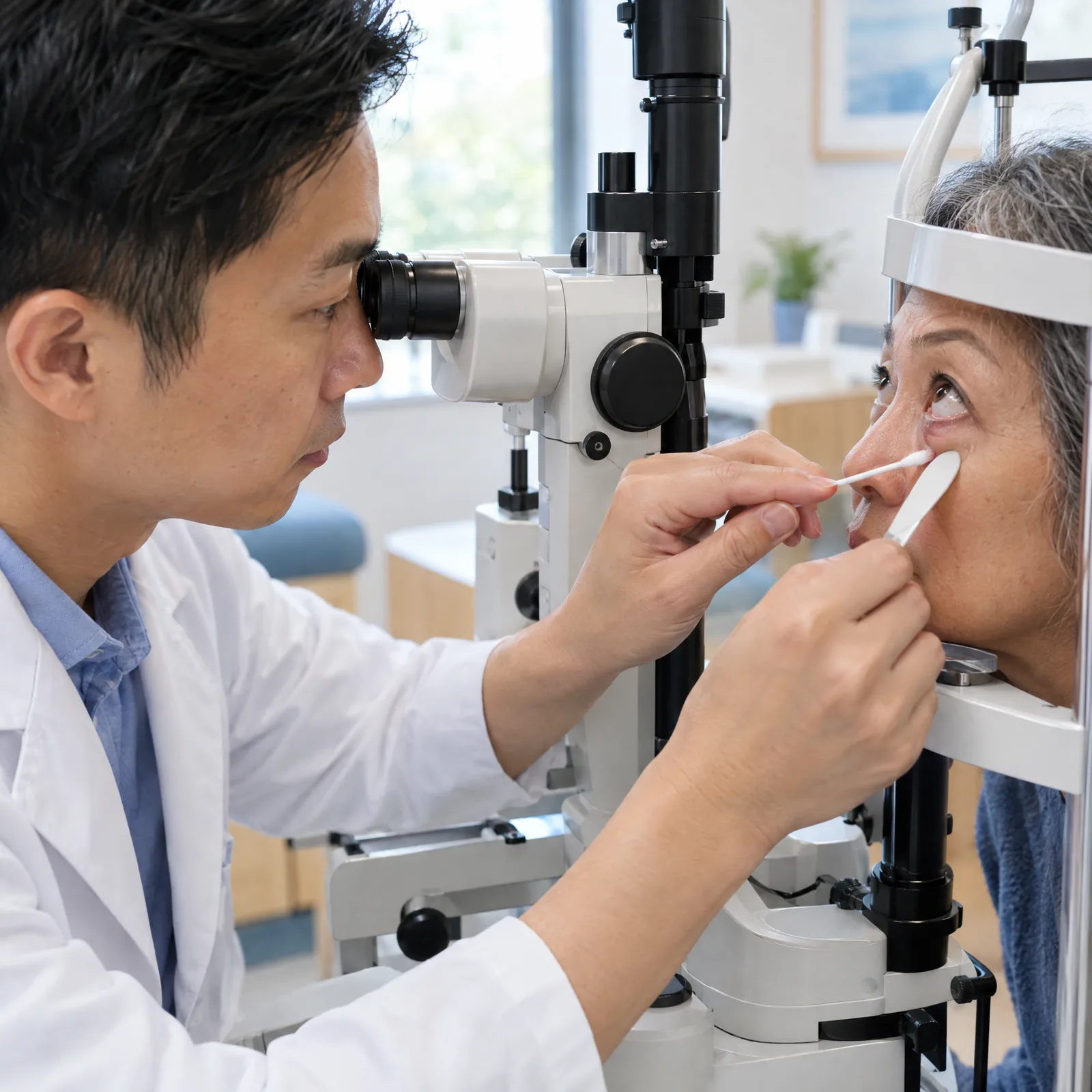
A fuller press across every gland to push out the blockage and let the gland work normally again. Warm the lids, then squeeze the lid against a firm backstop placed on its inner surface. The backstop shields the eye and lets you deliver more force to the glands.
Pressure from a fingertip or cotton tip varies between clinicians and between visits. The Meibomian Gland Evaluator uses a spring to deliver a fixed 1.25 g/mm² across 40 mm², covering roughly eight glands, which is close to what the lids exert in a normal blink. If a gland releases liquid oil under that load, it is functioning.
1.25 g/mm²standardized, blink-level load
8 glandsunder each 40 mm² placement
24glands along the lower lid
Tally the glands releasing liquid secretion (MGYLS) in the nasal, middle and temporal thirds of the lower lid
MGYLS counts track with patients' dry eye symptoms
Temporal thirds are far more likely to have zero working glands: 86% of them compared with 6% of nasal thirds
Because the load never changes, counts from different visits can be compared directly
Stop before the shaft bottoms out on the spring, and do not push harder once it has traveled about 6 mm. Wipe it with alcohol between patients.
Grading
Score the secretions.
The MGD Workshop grades meibum quality and expressibility on separate scales. Record both on the first visit and at each recheck.
Meibum quality
Eight glands across the middle third of the lower lid, each given 0 to 3, for a total from 0 to 24.
0ClearNormal oil with an olive oil look.
1CloudyHazy secretion, typical of early MGD.
2Cloudy and particulateSecretion with a grainy texture.
3Toothpaste-thickSolidified meibum seen in advanced MGD.
Expressibility
Five glands on either the lower or upper lid, scored by the number that express.
0Every gland expresses
1Three or four glands
2One or two glands
3None express
When nothing comes out and the orifices look open, the glands may already be atrophied. Therapeutic expression will produce little, and meibography will show how much gland tissue is left.
How expression fits each stage.
In the MGD Workshop's staged plan, treatment steps up as expressibility, meibum quality, symptoms and staining get worse.
Stage
MGD grade
Symptoms and staining
Treatment
Stage 1
Expressibility and secretion quality barely changed
Asymptomatic; no corneal staining
Educate the patient about MGD, diet, surroundings and medications that dry the eye. Think about lid hygiene, including warming and expression.
Stage 2
Expressibility and secretion quality slightly changed
Minimal to mild symptoms; staining absent or limited
Lid warming for at least four minutes once or twice a day, then moderate to firm massage and expression. Think about lubricants and other topicals.
Stage 3
Expressibility and secretion quality moderately changed
Moderate symptoms; mild to moderate staining, mostly peripheral
Everything above, plus oral tetracycline derivatives, a lubricant ointment at bedtime and anti-inflammatory treatment when indicated.
Stage 4
Expressibility and secretion quality severely changed
Marked symptoms; marked staining that includes the central cornea
Everything above, plus anti-inflammatory treatment for dry eye.
Plus disease, including Demodex-related anterior blepharitis, other anterior blepharitis or chalazion, can show up at any stage and is managed in parallel. For Demodex blepharitis, read XDEMVY ›
Step by step
Therapeutic expression from start to finish.
Working away from the slit lamp gives you more room to move, but you still need magnification to make the diagnosis.
Warm the lids
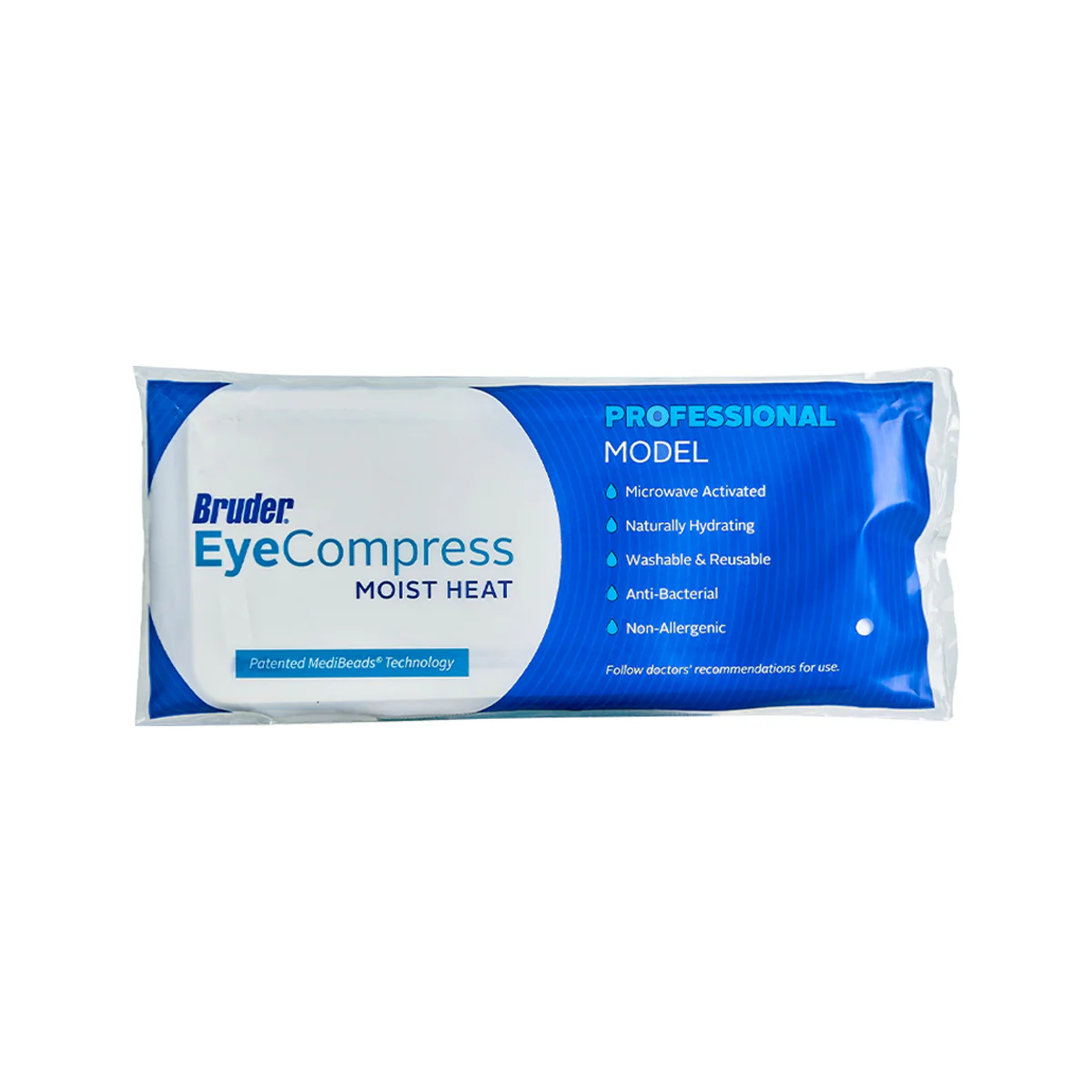
Use a warm compress for around 10 minutes before therapeutic expression so the meibum softens. Diagnostic expression rarely calls for a topical anesthetic drop, though one can help before a thorough therapeutic session.
Shield the cornea
Ask the patient to gaze upward while you work on the lower lid and downward for the upper lid.
Lower lid
Begin on the nasal side and draw the lid down so the orifices and palpebral conjunctiva are visible. Rest a paddle or a saline-dampened cotton tip on the palpebral conjunctiva halfway between the fornix and the lash line, then press on the outside of the lid with another applicator, rolling or rocking from the gland base toward the openings. Work across the lid one section at a time.
Upper lid
While the patient looks down, ease the lid slightly away from the globe, slide the paddle or cotton tip in halfway between the superior fornix and the lash line, and roll or rock downward. Repeat along the full lid.
Afterward
In-office artificial tears calm the palpebral conjunctiva. Tell patients that a single expression won't cure MGD and that home care has to continue over the long term.
Technique based on Hatley and Lighthizer in Review of Optometry; force limits from the MGD Workshop treatment report.
When manual expression falls short.
TFOS DEWS III includes device-based lid heating, intense pulsed light and low-level light therapy among in-office options for MGD.
Where gland expression sits among dry eye treatments
Dry eye care runs from home care to surgery, and many patients use several paths at once. Vision Rescue does not rank these paths; the treating doctor and the patient choose based on severity, the main driver and the patient's circumstances.
At-home and OTC care
Lubricant drops, gels and ointments, lid hygiene, warm compresses and nutrition. Usually the base layer at every severity.
Recommended by optometrists and ophthalmologists; done by the patient at home. Product guides ›
Prescription therapy
Anti-inflammatory and tear-film drugs such as cyclosporine, lifitegrast and perfluorohexyloctane, varenicline nasal spray, lotilaner for Demodex and short steroid courses.
Prescribed by ophthalmologists and optometrists within state scope. Prescription options ›
In-office procedures
Gland expression, thermal pulsation and lid-heating devices, intense pulsed light, light therapy and lid-margin cleaning.
Offered in optometry and ophthalmology practices, often run by trained staff. In-office procedures ›
Punctal occlusion
Temporary or long-lasting plugs that keep the patient's own tears on the eye, and permanent closure by thermal cautery when plugs are not enough.
Plugs placed by ODs and MDs where state scope allows; cautery closure is a surgical step, usually by an ophthalmologist. Punctal plugs ›
Advanced and surgical care
For severe disease: autologous serum drops, amniotic membrane, scleral lenses and eyelid surgery such as tarsorrhaphy.
Often cornea and oculoplastic specialists, with the co-managing OD or MD. Scleral lenses ›
How do diagnostic and therapeutic expression differ?
Diagnostic expression is a brief, steady press on the lower lid to see and grade what the glands release. Therapeutic expression empties every gland more completely, usually after the lids are warmed, to relieve the blockage.
How do you grade meibum?
Under the MGD Workshop system, quality gets 0 to 3 for each of eight glands in the middle third of the lower lid (0 clear, 1 cloudy, 2 cloudy and particulate, 3 toothpaste-thick; total 0 to 24). Expressibility gets 0 to 3 based on five glands (0 all express, 1 three or four, 2 one or two, 3 none).
Why choose the Meibomian Gland Evaluator over a cotton tip?
Its spring delivers the same 1.25 g/mm² across roughly eight glands on every use, close to the force of an ordinary blink. The number of glands releasing liquid secretion at that load shows how many work during daily blinking, and the count holds up across visits and examiners. Published guidance calls standardized tools for diagnostic expression desirable, if not mandatory.
What if no meibum appears?
If nothing is released and the orifices are open, the glands may be atrophied, so therapeutic expression will yield little. Meibography reveals how much gland tissue remains.
How much force is too much?
Pain, not the tool, usually caps the force. Discomfort climbs quickly past roughly 15 g/mm² (about 5 PSI), and 80 g/mm² (about 25 PSI) or more is often unbearable. A firm backstop inside the lid guards the globe.
Is anesthetic needed?
Generally not for diagnostic expression. For a more thorough therapeutic session, a topical anesthetic drop may be worthwhile depending on the patient.
How long should patients warm their lids at home?
From stage 2 on, the MGD Workshop plan calls for lid warming of at least four minutes once or twice a day, then moderate to firm massage and expression.
What instruments are used?
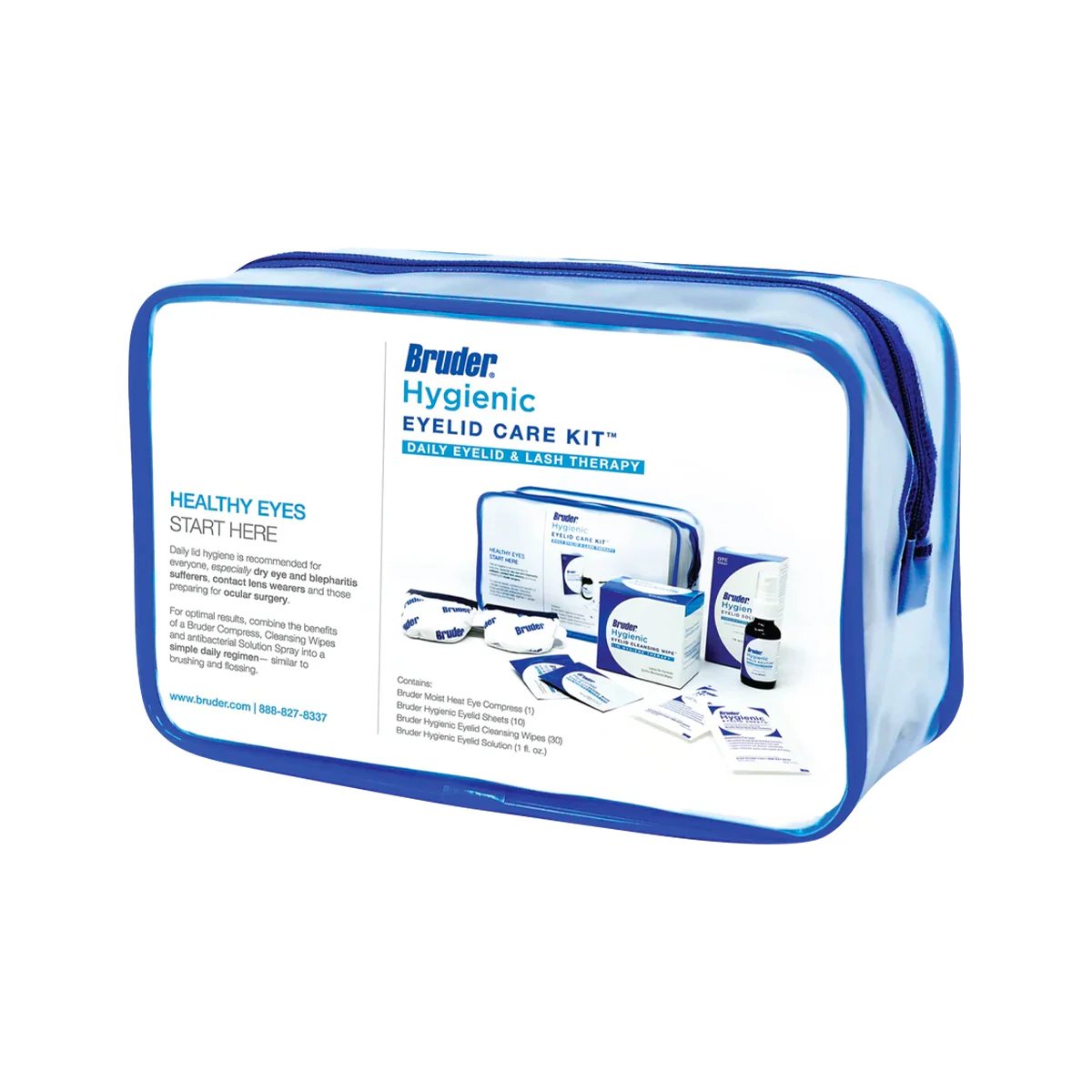
Options run from cotton-tip applicators to paddles placed behind the lid and one-handed forceps-style expressors. Vision Rescue stocks the Meibomian Gland Evaluator for standardized diagnostic expression, along with warm compresses and lid hygiene products for home care.
Where do in-office heat devices come in?
Thermal pulsation, lid heating systems, intense pulsed light and low-level light therapy are all aimed at MGD, and TFOS DEWS III names device-based lid warming, IPL and LLLT among in-office MGD treatments.
Do optometrists and ophthalmologists both perform gland expression?
Yes. Diagnostic and therapeutic expression are part of dry eye care in optometry and ophthalmology practices alike, and the same MGD Workshop grading and staging apply in both. Who may perform each step follows state scope of practice.
References
Korb DR, Blackie CA. Meibomian gland diagnostic expressibility: correlation with dry eye symptoms and gland location. Cornea. 2008;27(10):1142-7. PubMed
Ioussifova M, Kataria H. Tackle MGD with These Hands-on Interventions. Review of Optometry. October 11, 2023. Read article
Geerling G, et al. The International Workshop on Meibomian Gland Dysfunction: Report of the Subcommittee on Management and Treatment. Invest Ophthalmol Vis Sci. 2011;52(4):2050-64. PubMed
Tomlinson A, et al. The International Workshop on Meibomian Gland Dysfunction: Report of the Diagnosis Subcommittee. Invest Ophthalmol Vis Sci. 2011;52(4):2006-49. PubMed
Jones L, et al. TFOS DEWS III: Management and Therapy. Am J Ophthalmol. 2025;279:289-386. PubMed
Wolffsohn JS, et al. TFOS DEWS III: Diagnostic Methodology. Am J Ophthalmol. 2025;279:387-450. PubMed
Hatley J, Lighthizer N. How to Impress (and Express) Your Patients. Review of Optometry. May 15, 2015. Read article
American Academy of Ophthalmology. Dry Eye Syndrome Preferred Practice Pattern, 2023. AAO
Build gland expression into every dry eye exam.
Score the glands on day one, relieve the blockage, and keep patients warming and cleaning their lids between appointments.
This page summarizes published clinical guidance for eye care professionals and is not a substitute for clinical judgment. Product names are trademarks of their owners. Read each manufacturer's instructions for use before use.