
Sports vision · Equipment
Sports Vision Equipment assessment and training tools.
Optometry and ophthalmology practices offering sports vision pair a full eye exam with assessment and training of visual and visuomotor skills.
Quick answer
Exam first, then assess, then train.
Every sports vision program starts with a comprehensive exam and correction of refractive error. Assessment stations then measure skills such as reaction time and tracking, and training tools target the weak spots. A 2026 meta-analysis found stroboscopic training improved sport-related outcomes across multi-session programs, though results varied widely between studies. A small set of devices covers most programs.
Key takeaways
- Correct the refraction and check binocular vision before any training.
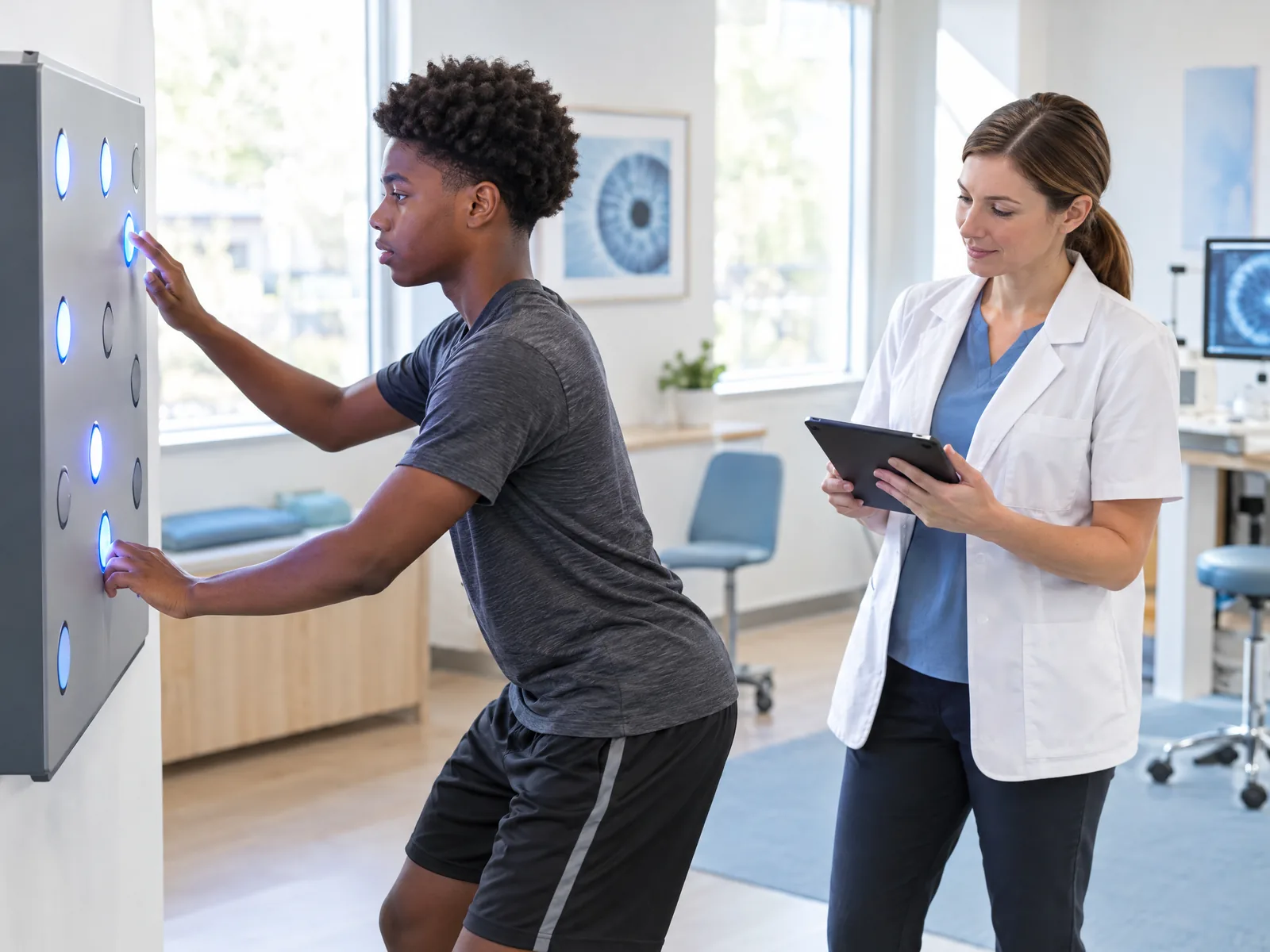
- Light boards such as Dynavision D2 train reaction time, peripheral awareness and hand-eye coordination.
- NeuroTracker uses 3D multiple object tracking in short sessions.
- Stroboscopic eyewear showed benefit in multi-session programs but not single exposures.
- Protective eyewear belongs in every athlete conversation.
Six tools practices use.
Descriptions from each maker; evidence varies by tool and outcome.
Assessment station
Senaptec markets a Sensory Station for assessing visual and sensorimotor skills, plus training stations and strobe eyewear.
Light board
Dynavision D2 records reaction to lights to train peripheral awareness, hand-eye coordination and visual reaction time.
3D object tracking
NeuroTracker has users track moving targets in 3D, adjusting speed to their level, in sessions of about 6 minutes.
Stroboscopic eyewear
Strobe glasses intermittently block vision during practice drills.
Contact lenses and refraction
Sharp, stable correction is the foundation of every program.
Protective eyewear
Sport-specific protectors tested to ASTM standards, and polycarbonate shields in ice hockey and lacrosse.
A sample program structure.
How practices commonly package the service; adjust to your athletes.
| Phase | What happens | Equipment |
|---|---|---|
| Comprehensive exam | Refraction, binocular vision and eye health | Standard exam lane |
| Baseline assessment | Reaction time, tracking and visuomotor measures | Assessment station, light board |
| Training block | Repeated sessions on targeted skills | Light board, 3D tracking, strobe eyewear |
| Re-assessment | Compare to baseline | Same assessment tools |
| Protection | Fit sport-appropriate protective eyewear | Optical dispensary |
Partner with one local team or athletic trainer before buying equipment. A single team gives you volume, testimonials and a schedule that fills training slots predictably.
Frequently asked questions
Does sports vision training improve performance?
Evidence is mixed. A 2026 meta-analysis of stroboscopic training found improvements in sport-related outcomes for multi-session programs, with large differences between studies.
Do I need all of this equipment?
No. Many optometry and ophthalmology practices start with a comprehensive exam, binocular vision testing and one training tool, then add more as demand grows.
Is sports vision training covered by insurance?
Plan it as a self-pay program and verify any coverage before billing a payer. Medical findings from the exam are handled separately.
Which athletes need protective eyewear?
The AAO highlights basketball, baseball, racquet sports, soccer and field hockey, and recommends protectors tested to ASTM standards.
How common are sports eye injuries?
The AAO cites nearly 30,000 sports-related eye injuries treated in U.S. emergency rooms each year. Optometrists and ophthalmologists both see urgent eye injuries; serious trauma is managed by ophthalmologists, including surgery when needed.
Does Vision Rescue sell this equipment?
No. Training devices come from their makers. Vision Rescue supplies contact lens, eye drop and eye care products.
References
- Senaptec. Sensory Station and Strobe products. Senaptec
- Dynavision International. Dynavision D2. Dynavision
- NeuroTracker. 3D multiple object tracking. NeuroTracker
- Lu J, et al. Effects of stroboscopic visual training on sport performance: systematic review and meta-analysis. BMC Sports Sci Med Rehabil. 2026. PubMed
- American Academy of Ophthalmology. Sports eye injuries. AAO
- Every source used across these guides is listed on the Vision Rescue sources page.
About this guide
Written for licensed eye care practices by the Vision Rescue team. Questions: providers@visionrescue.com or 1-855-692-8024.
Important notes and disclosures
Information only, not clinical or legal advice. Product names are trademarks of their owners and appear for identification; Vision Rescue does not endorse or review them. Scope of practice, coverage and coding rules vary by state and payer, so confirm locally. Clinical decisions rest with the treating eye doctor.
Build a program athletes come back to.
Start with the exam, add one training tool, and protect every athlete's eyes.
Stay current: Latest eye care industry news